Every year, distracted driving claims thousands of lives — in the United States alone, the CDC reports that approximately 3,000 people die annually in crashes involving distracted drivers, with cell phone use being one of the leading culprits. Glancing at a notification, typing a quick reply, or even just holding your phone to check GPS takes your eyes off the road for an average of five seconds — long enough to travel the length of a football field at highway speeds.
For millions of drivers, the temptation to interact with a smartphone behind the wheel is a daily reality. Whether it’s navigating an unfamiliar route, answering a hands-free call, or managing music, the need to access a phone while driving isn’t going away. What can change is how safely that access happens.
Universal cell phone holders have emerged as one of the most practical and affordable car accessories for addressing this risk. But not all mounts are created equal — a poorly designed holder can wobble, obstruct your view, or fail at the worst moment. This article breaks down exactly what makes a phone holder genuinely safe, what features to prioritize, and how to choose and install one that keeps both your device and your attention where they belong.
Why Driving Safety Demands a Reliable Phone Mount
Holding a phone while driving isn’t just illegal in most states — it’s genuinely dangerous. Research from the National Highway Traffic Safety Administration shows that manual phone use behind the wheel increases crash risk by up to four times compared to undistracted driving. The problem isn’t just the seconds your eyes leave the road; it’s the cognitive load of managing a device while simultaneously processing traffic, speed, and surroundings. Even voice-activated features can create enough mental distraction to impair reaction time.
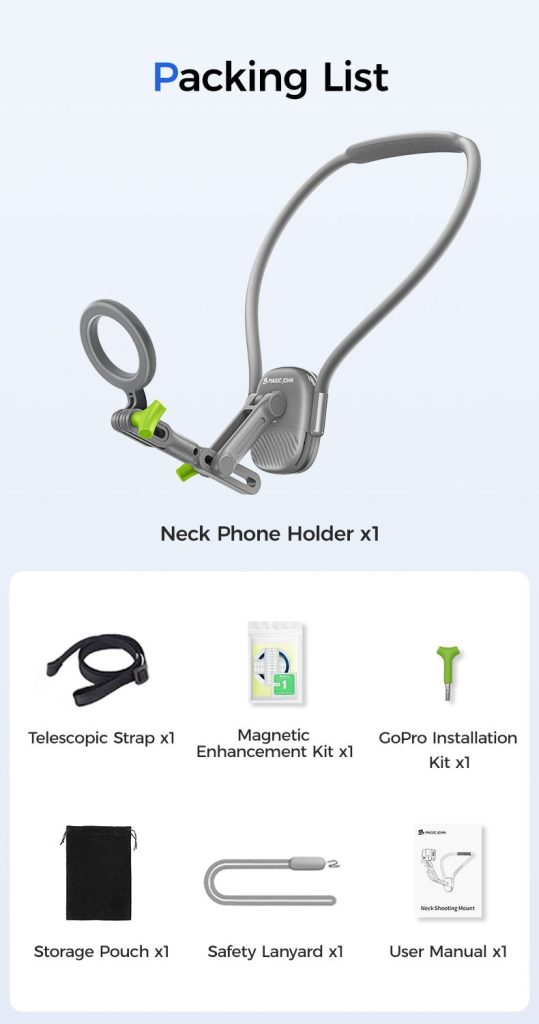
For drivers who rely on smartphones for navigation, hands-free calls, or audio streaming, the question isn’t whether to use a phone in the car — it’s how to do so responsibly. A secure, well-positioned phone mount directly addresses this challenge. By keeping your device within your natural line of sight and eliminating the need to pick it up, a quality holder lets you glance at a map or accept a call with the same minimal effort as checking a dashboard gauge.
Studies support this practical benefit. Research published in transportation safety journals indicates that properly mounted devices reduce the frequency and duration of eyes-off-road events compared to phone use without a holder. Drivers using mounts also report lower stress levels during navigation-heavy trips, partly because they aren’t juggling the phone between tasks.
Universal phone holders amplify these benefits by fitting a wide range of vehicles and devices without requiring permanent modifications. Whether you drive a compact sedan or a full-size SUV, a universal mount offers the same core advantage: your phone stays fixed, visible, and accessible without demanding your hands or full attention. That accessibility — delivered safely — is precisely why choosing the right holder matters as much as choosing to use one at all.
Key Safety Features to Look for in Universal Phone Holders
A phone holder is only as safe as its weakest component. When evaluating universal mounts, the grip mechanism deserves the closest scrutiny. Clamp-style holders with spring-loaded arms or adjustable side grips should apply firm, consistent pressure across the phone’s edges without relying on the driver to readjust mid-trip. Silicone padding on contact points protects the device while preventing micro-movements that accumulate into noticeable wobble over time. For vibration resistance — a real concern on rough roads or highways — look for holders with reinforced locking joints and rubberized bases that absorb road feedback rather than transmit it directly to your phone.
Material quality directly affects longevity and reliability. High-grade ABS plastic and aluminum alloy construction outperform cheaper alternatives that become brittle in extreme temperatures, which is a genuine risk in sun-exposed dashboards during summer. A holder that cracks or loosens after a few months isn’t just inconvenient — it’s a distraction hazard. Quick-release mechanisms add another layer of practical safety: being able to detach your phone with a single thumb press means you’re not wrestling with a stubborn clamp when you need your device quickly after parking. It’s also worth noting that repeated mounting and dismounting can wear on your phone’s screen over time, which is why many drivers who use daily mounts pair their device with a quality screen protector — brands like MagicJohn offer options specifically designed to withstand the friction and pressure of regular use in a car mount.
Magnetic Mounts: Evaluating Their Safety and Convenience
Magnetic mounts use rare-earth magnets paired with a thin metal plate that attaches to your phone or slips inside its case. The attachment is near-instant, which removes the fumbling that makes other mount types momentarily distracting. The primary safety concern is holding strength — lower-quality magnets can release under sharp braking or sudden turns. To ensure a secure hold, choose mounts rated for at least 10 pounds of pull force, and position the metal plate centrally on the back of your device. Drivers using thick cases should opt for plates that attach externally rather than inside the case, maintaining full magnetic contact. One important note: strong magnets can interfere with wireless charging, so verify compatibility if your vehicle supports Qi charging pads.
The Safety Benefits of 360° Rotation and Adjustable Angles
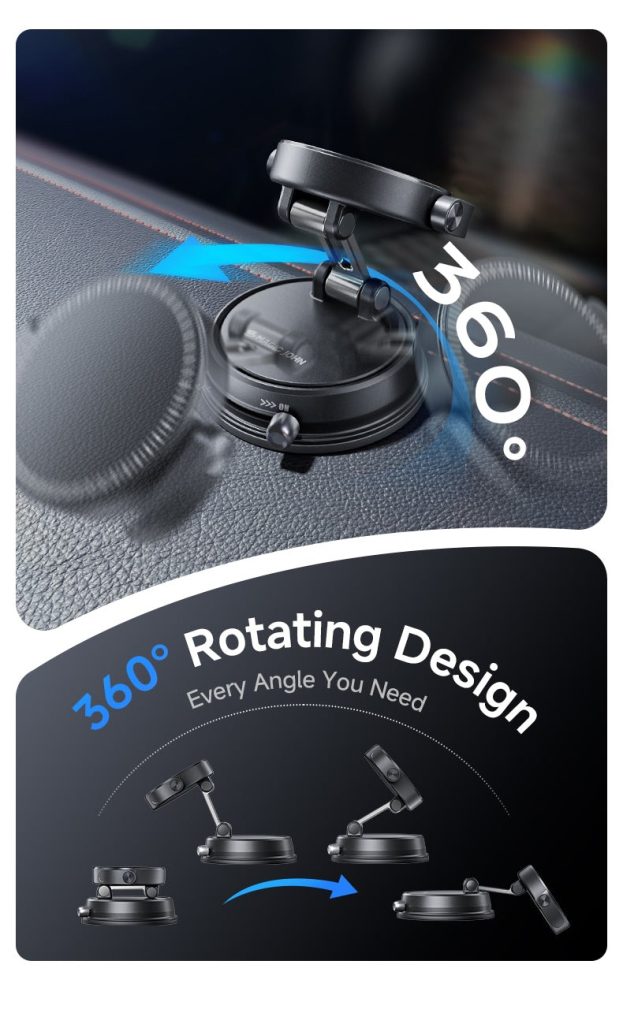
A mount that locks your phone in a single fixed orientation forces you to adapt your viewing angle to the holder — exactly the wrong dynamic for safe driving. Full 360° rotation solves this by letting you position the screen precisely within your natural sightline, whether you prefer portrait mode for navigation apps or landscape for video calls at a stoplight. Adjustable tilt adds a second axis of control, allowing you to compensate for dashboard height differences across vehicle types. The practical safety gain is measurable: when your phone sits at the right angle, a quick glance takes a fraction of a second rather than a prolonged head movement. Look for rotation joints with a firm click-lock mechanism that holds position under vibration rather than gradually drifting, which would require manual correction while driving.
How to Choose the Safest Phone Holder for Your Car: A Step-by-Step Guide
Selecting the right mount starts with compatibility — not just whether your phone fits, but whether the holder suits your specific vehicle’s interior. Begin by measuring your phone’s dimensions and confirming the holder’s size range covers it with room to spare. A clamp that maxes out at your phone’s width will struggle to maintain grip over time. Next, consider your car’s available mounting surfaces. Vent clips are the most accessible option, but they can block airflow and may loosen on vents with thin or angled slats. Dashboard mounts using adhesive pads or suction cups offer more stable positioning but require a flat, clean surface — curved or textured dashboards can cause suction cups to fail gradually. CD slot mounts are a reliable middle ground for vehicles that have them, anchoring firmly without adhesives or airflow interference.
Once you’ve identified a compatible mounting type, shift focus to safety certifications and verified user feedback. Look for products that reference drop-test ratings or vibration-resistance standards, and treat user reviews as field data — patterns of complaints about loosening joints or failed adhesives after a few weeks are reliable red flags. Pay particular attention to reviews from drivers with the same vehicle type as yours, since dashboard geometry varies significantly between car models.
Material quality and warranty terms round out the evaluation. A mount backed by at least a one-year warranty signals manufacturer confidence in durability. For drivers in climates with extreme heat or cold, prioritize aluminum alloy or high-grade ABS construction over standard plastic, which can warp or crack under thermal stress. Finally, avoid mounts without any stated load capacity — a holder rated for your phone’s weight is a basic but frequently overlooked safety checkpoint.
Installation and Usage Best Practices for Maximum Safety
Even the best-rated phone holder becomes a liability if installed incorrectly. Before mounting, identify your car’s airbag zones — these are typically embedded in the steering wheel, dashboard, and side panels. Placing a mount directly in front of a dashboard airbag deployment path means the holder itself could become a projectile in a collision. Most vehicles mark airbag locations in the owner’s manual; when in doubt, position mounts toward the center console side of the dashboard or on a vent away from the driver’s direct forward sight line.
For suction cup mounts, surface preparation is the single most important installation step. Clean the mounting area thoroughly with isopropyl alcohol and allow it to dry completely before pressing the cup down and engaging the locking lever. A common mistake is mounting on a slightly curved or textured surface — even minor irregularities break the vacuum seal progressively, causing the mount to drop unexpectedly. Adhesive pad mounts require 24 hours of curing time before use; attaching your phone immediately after installation dramatically increases the chance of failure. Vent clip mounts should grip the entire slat width rather than just the tip, distributing load evenly to prevent the clip from bending or the vent slat from snapping under phone weight.
Daily usage habits matter as much as installation. Before every drive, give the mount a firm but brief push to confirm it hasn’t loosened overnight, particularly in climates where temperature swings between day and night are significant. Position your phone before starting the engine — adjusting the holder while moving defeats its entire safety purpose. For long-term maintenance, wipe suction cups monthly with a damp cloth to remove dust and oils that degrade adhesion, and inspect clamp padding for compression wear every few months. Replacing worn padding costs almost nothing and prevents the gradual wobble that turns a reliable mount into a distraction.
Choosing the Right Phone Holder for Safer, Smarter Driving
A universal cell phone holder is one of the smallest investments you can make in driving safety, yet its impact on reducing distraction is genuinely significant. The features that separate a safe mount from a risky one come down to a consistent set of priorities: a grip mechanism that holds firm under vibration and sudden braking, durable materials that won’t degrade under temperature extremes, and a mounting position that keeps your phone within your natural sightline without obstructing critical dashboard visibility or airbag zones. Magnetic mounts, 360° rotation, and quick-release mechanisms aren’t just convenience features — each one reduces the seconds you spend managing your device instead of managing the road.
Choosing the right holder means matching it to your specific phone, vehicle, and driving habits rather than defaulting to the cheapest option available. Proper installation and a brief daily check add almost no time to your routine but dramatically extend the reliability of whichever mount you choose.
Ultimately, technology should serve safety, not compete with it. A well-chosen, correctly installed phone holder lets your smartphone do its job — navigation, hands-free calls, audio — without pulling your attention away from the task that matters most. Treat your mount as a genuine safety tool, and it will perform like one every time you get behind the wheel.
