Urban commuting has become an increasingly frustrating experience. Traffic congestion eats into productive hours, fuel costs continue climbing, and public transit schedules don’t always align with real-life demands. For millions of city dwellers, finding a smarter, more affordable way to get from point A to point B has become less of a preference and more of a necessity.
Enter the moped style ebike — a retro-inspired, motor-assisted two-wheeler that’s quietly reshaping how urban commuters think about daily transport. Blending the classic aesthetic of a vintage moped with modern electric technology, these bikes have caught the attention of riders who want practicality without sacrificing style. They’re particularly attractive to cost-conscious commuters who need dependable transportation without the overhead of car ownership or the unpredictability of rideshares.
But does the moped style ebike truly deliver the best balance of affordability, comfort, and performance for everyday urban use? With so many electric bike options now available — from nimble e-city bikes to rugged e-mountain bikes — it’s worth asking whether this specific style genuinely stands out. This article breaks down the comparison and helps you decide.
Understanding Moped Style Ebikes: Design and Commuter Appeal
A moped style ebike is essentially a pedal-assisted electric bicycle designed to mimic the visual identity of a classic moped — think curved frames, cushioned step-through seats, and retro bodywork — while operating under the legal classification of an electric bicycle. Unlike traditional mopeds, these bikes don’t require registration or a motorcycle license in most regions, making them far more accessible for everyday riders. The motor-assisted design means you can pedal when you want to, throttle when you need to, and arrive at your destination without breaking a sweat.
What sets the moped style ebike apart from other electric bikes isn’t just looks — it’s the thoughtful integration of commuter-friendly features. Throttle control gives riders an instant power boost without pedaling, which is invaluable when pulling away from traffic lights or navigating slow-moving intersections. The seating position is upright and relaxed, reducing back strain during longer rides. Many models also include built-in rear racks, under-seat storage, or mounting points for panniers, making grocery runs or laptop commutes entirely practical.
For urban environments specifically, these bikes hit a practical sweet spot. Their motor assistance eliminates the physical barrier that deters many people from cycling to work — no more arriving at the office drenched in sweat after a hilly route. The low step-through frame design makes mounting and dismounting effortless, even in business attire.
Key Features That Enhance Urban Commuting
Several features make moped style ebikes particularly well-suited for city commuting. Battery range typically covers 30 to 60 miles per charge, which comfortably handles most urban round trips. Motor power — usually between 250W and 750W — provides enough torque to handle moderate hills without strain. Build quality on reputable models includes rust-resistant frames and puncture-resistant tires designed for daily wear. Safety elements such as integrated front and rear lights, responsive hydraulic or mechanical disc brakes, and reflective detailing round out a package that prioritizes real-world usability over novelty.
Comparing Affordable Electric Bikes: Moped Style vs. E-City, E-MTB, and Eskute Trike
The affordable electric bike market has expanded rapidly, giving commuters a genuinely diverse range of options. While moped style ebikes have carved out a strong niche, they’re not the only contenders worth considering. E-city bikes, electric mountain bikes, and specialty designs like the Eskute Trike each bring something different to the table. Understanding how these categories stack up against one another helps clarify which truly serves the urban commuter best.
E-City Bikes: Agile and Urban-Focused
E-city bikes are purpose-built for urban navigation. They typically feature lightweight aluminum frames, narrow tires optimized for pavement, and pedal-assist systems that amplify your pedaling effort rather than replacing it. Their streamlined design makes weaving through traffic or locking up at a bike rack straightforward. Among affordable electric bikes, e-city models often sit at the lower end of the price spectrum, making them accessible entry points for first-time riders. However, that lean design comes with trade-offs. Cargo capacity is usually limited to a small rear rack, and the riding position can feel less relaxed over longer distances. Riders who want a more substantial, feature-rich commuter experience may find e-city bikes slightly underwhelming compared to the moped style’s integrated storage and cushioned seating.
E-MTB Bikes: Versatility with Off-Road Edge
Electric mountain bikes are built for punishment — full suspension systems, aggressive tread patterns, and high-torque motors designed to conquer steep, uneven terrain. For commuters whose routes include unpaved paths, gravel shortcuts, or heavily potholed streets, an e-MTB offers genuine durability advantages. The downside is cost and efficiency. Robust suspension and oversized components push prices higher than comparable moped style or e-city options, and the added weight reduces battery efficiency on flat urban roads. Unless your commute genuinely demands off-road capability, an e-MTB is likely overbuilt for the job — and your wallet will feel it.
Eskute Trike: Stability for Niche Commuters
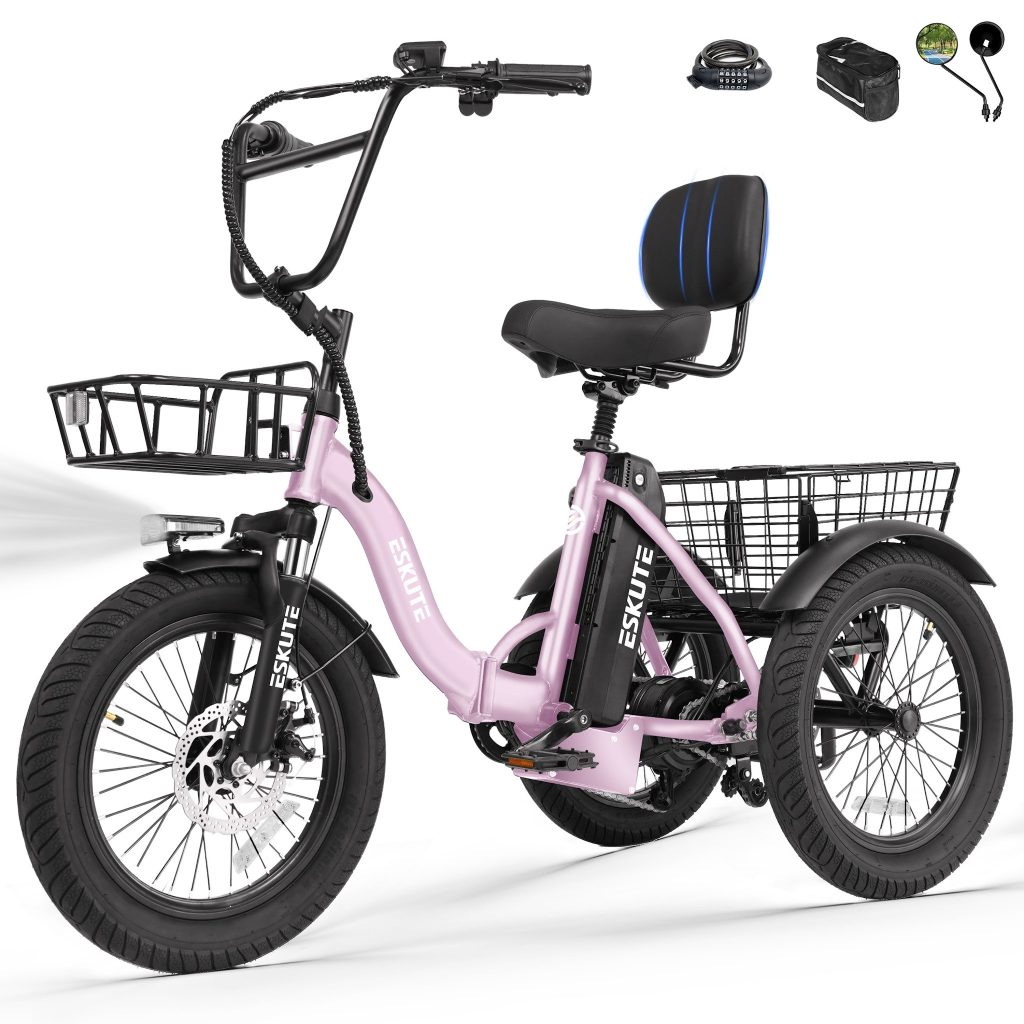
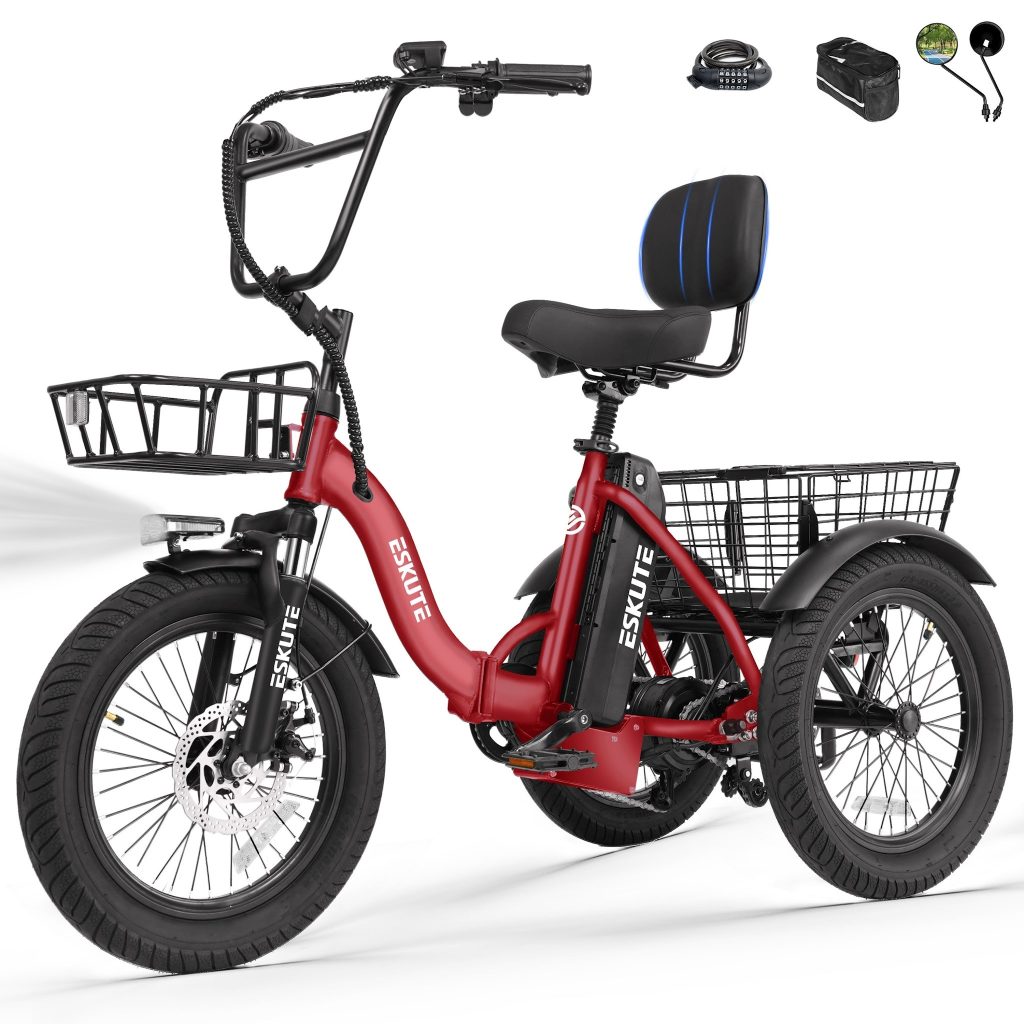
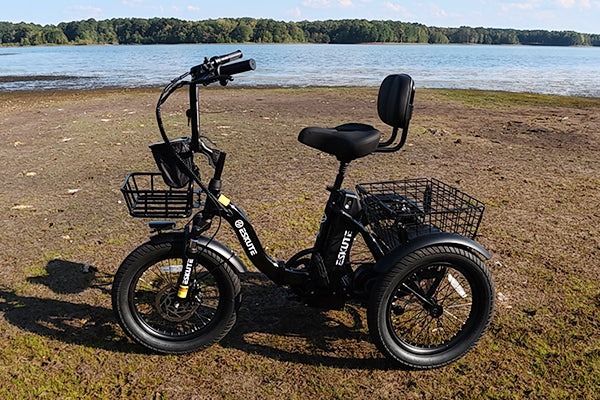
The Eskute Trike takes a fundamentally different approach with its three-wheel configuration, prioritizing stability over agility. It’s an excellent solution for riders who have balance concerns, physical limitations, or simply prefer the security of a platform that won’t tip at a standstill. The trike’s cargo capacity is also notably generous, making it practical for shopping trips or equipment transport. That said, its wider footprint reduces maneuverability in tight urban spaces, and navigating crowded bike lanes or narrow parking areas can be cumbersome. For the average urban commuter seeking a versatile daily rider, the moped style ebike still offers a more balanced combination of accessibility, storage, and real-world agility than the trike’s specialized design allows.
Addressing Urban Commuters’ Needs: Affordability and Durability Solutions
For most urban commuters, the decision to switch to an electric bike comes down to two core concerns: whether the upfront investment makes financial sense, and whether the bike will hold up under the demands of daily use. Moped style ebikes address both questions more directly than many alternatives, combining accessible pricing with construction standards that are genuinely built for the long haul.
Affordability: Cost-Effective Commuting Made Simple
The financial case for a moped style ebike becomes clear when you stack it against conventional transport costs. Car ownership in a city — factoring in insurance, parking, fuel, and maintenance — easily runs into thousands of dollars annually. Even regular rideshare use adds up faster than most commuters realize. A quality moped style ebike, by contrast, requires only occasional maintenance and cents-per-charge electricity costs. Many regions also offer e-bike tax incentives, employer commuter benefit programs, or subsidized financing options that reduce the initial purchase barrier further. Over a 12-month period, the savings compared to car commuting or transit passes can comfortably offset the purchase cost, making the long-term value proposition genuinely compelling rather than just theoretical.
Durability and Reliability: Built for Daily Urban Use
Affordability means little if the bike spends more time in the repair shop than on the road. Reputable moped style ebikes address this through corrosion-resistant aluminum or steel frames, sealed motor housings that resist water and dust ingress, and puncture-resistant tires rated for high-mileage urban use. Battery lifespan on quality models typically spans 500 to 800 charge cycles before meaningful capacity degradation, translating to several years of daily commuting before a replacement becomes necessary. To extend longevity further, riders should store batteries indoors during extreme cold, keep tire pressure correctly inflated to reduce motor strain, and periodically check brake pad wear. Most established brands back their bikes with warranties covering the frame and drivetrain, providing an additional safety net that reinforces the reliability case for daily commuters.
Practical Steps to Choose Your Best Affordable Commute Solution
Step 1: Assess Your Specific Commuting Requirements
Before browsing models, get specific about what your commute actually demands. Map your daily distance — if your round trip exceeds 40 miles, prioritize bikes with larger battery capacity. Consider your route’s terrain: a flat city grid favors lighter e-city bikes, while regular hills make the moped style’s higher-torque motor worth the investment. Think honestly about cargo needs — do you carry a laptop, gym bag, or groceries regularly? If so, the moped style’s integrated rack and storage options become a practical necessity rather than a bonus. Finally, set a realistic budget that accounts for accessories like a quality lock, helmet, and fenders, not just the sticker price.
Step 2: Research and Compare Models Based on Key Criteria
Once your requirements are clear, use them as a filter. Read verified owner reviews on retailer sites and cycling forums, focusing on long-term reliability reports rather than first-impression impressions. Brands like Eskute offer a range of models across different riding styles, making it useful to explore their lineup when benchmarking features and pricing across categories. Visit a local dealer if possible — a test ride reveals fit and handling qualities no spec sheet can communicate. When comparing moped style ebikes against e-city or trike alternatives, score each option against your Step 1 checklist. A bike that scores highest across your personal priorities — not the most features overall — is the right choice.
Step 3: Evaluate Long-Term Value and Support
The purchase price is only part of the equation. Check whether the brand offers accessible after-sales service, including local repair partnerships or responsive customer support for warranty claims. Confirm battery replacement availability and cost, since this will eventually become a real expense. Community forums and owner groups for specific models offer unfiltered insight into how bikes perform after 12 or 24 months of real use. A slightly higher upfront cost from a well-supported brand often delivers better long-term value than a cheaper model with limited service infrastructure.
Making the Right Choice for Your Urban Commute
The moped style ebike makes a genuinely strong case as the best affordable commute solution for most urban riders. Against e-city bikes, it offers superior comfort, storage, and motor capability without a dramatic price premium. Against e-MTBs, it wins on efficiency and cost-effectiveness for pavement-focused routes. Against the Eskute Trike, it delivers the maneuverability that dense urban environments demand. Across nearly every comparison, the moped style ebike lands closest to the practical center — versatile enough for varied commutes, affordable enough to justify the switch from car or transit, and durable enough to earn its keep over years of daily use.
That said, no single bike is the right answer for every rider. Someone with a short, flat commute and minimal cargo needs may find an e-city bike perfectly sufficient. A rider with balance concerns might genuinely benefit from the Eskute Trike’s stability. The best commute solution is ultimately the one that aligns with your specific route, budget, and lifestyle — not the one with the most features on paper.
Use the practical steps outlined here as your decision framework: assess your real commuting requirements, research models against those criteria, and weigh long-term value alongside the purchase price. Do that honestly, and you’ll arrive at the right choice with confidence.
