You walk into the living room one morning and find it — that unmistakable sign that your cat decided the corner of the rug was a perfectly acceptable bathroom. Sound familiar? If you’ve ever asked yourself, “Why is my cat pooping outside the litter box?” you’re far from alone. It’s one of the most common and frustrating challenges cat owners face, and the answer is rarely simple.
The truth is, this behavior is almost always a symptom of an underlying problem — and more often than not, the litter box itself is the culprit. From poor hygiene and bad placement to the sheer difficulty of keeping up with maintenance, traditional litter boxes create conditions that drive cats away. For households with multiple cats, these problems multiply quickly, making consistent cleanliness feel nearly impossible.
Fortunately, a new generation of automatic litter boxes is changing everything. These smart systems don’t just handle the scooping for you — they actively monitor your cat’s health, tracking usage patterns that can reveal early warning signs of serious conditions. In this article, we’ll break down the root causes of litter box avoidance, expose the chronic flaws of manual box management, and show how today’s automatic solutions offer a smarter, cleaner, and healthier path forward for you and your cats.
Understanding “Why Is My Cat Pooping Outside the Litter Box?”
When your cat starts eliminating outside the litter box, it’s tempting to treat it as a behavioral problem — something to correct through training or discipline. But that instinct misses the point entirely. The behavior is a signal, not the source. Your cat is communicating that something in their environment, their health, or their routine isn’t working. The real question isn’t how to stop the behavior, but what’s driving it in the first place.
The first thing to rule out is a medical issue. Conditions like urinary tract infections, constipation, inflammatory bowel disease, and arthritis can all make litter box use painful or urgent, pushing cats to go wherever they happen to be. A vet visit should always be your first step when this behavior appears suddenly or frequently — especially if you notice blood, straining, or dramatic changes in output.
Once medical causes are cleared, the focus shifts to the litter box itself, and this is where most owners find the real culprit. A dirty box is the single most common trigger. Cats are fastidiously clean animals, and a box that hasn’t been scooped within 24 hours can be enough to send them elsewhere. Beyond cleanliness, box size matters — many commercial options are simply too small for larger breeds. Litter texture and scent play a role too, as cats often reject heavily perfumed varieties. Placement is another overlooked factor; a box tucked in a noisy, high-traffic area creates stress, particularly in multi-cat homes where competition for resources runs high. These aren’t isolated quirks — they’re predictable, recurring failures built into how traditional litter boxes work.
The Old Way: Chronic Problems of Manual Litter Boxes
Even when cat owners understand what’s driving litter box avoidance, the manual system itself makes the problem nearly impossible to solve consistently. The core issue isn’t laziness or neglect — it’s that traditional litter boxes demand a level of daily attention that simply doesn’t fit modern life, and any lapse in that routine has immediate consequences for your cat’s behavior.
Scooping is the most obvious burden. Veterinarians recommend cleaning at least once daily, but for many households, that schedule slips — and cats notice immediately. Unlike dogs, cats won’t use a soiled space out of necessity. They’ll find an alternative, and that alternative is usually your floor. The problem compounds in multi-cat homes, where a single box can become unacceptable within hours of cleaning. Most experts recommend one box per cat plus one extra, but even that standard is difficult to maintain manually across multiple units.
Inconsistent cleanliness also makes it nearly impossible to monitor what’s actually happening with your cats’ health. When multiple cats share a box — or several boxes — tracking which cat used it, how often, and whether anything looked abnormal becomes guesswork. Early warning signs of urinary issues, digestive problems, or weight changes go completely unnoticed until symptoms become serious enough to require emergency care.
Odor control is another chronic failure point. Standard litter absorbs waste, but open boxes allow ammonia and bacteria to spread through the air continuously. No amount of scented litter fully masks this, and the result is a home that smells like what it contains. Beyond the discomfort for owners, persistent odor signals to cats that the box is already contaminated — reinforcing their reluctance to use it and feeding a cycle of avoidance that’s genuinely difficult to break without changing the system entirely.
The New Solution: How an Automatic Cat Litter Box Solves Core Issues
Automatic litter boxes address the fundamental failures of manual systems by removing the human variable from the equation entirely. Instead of relying on a consistent daily scooping schedule that real life constantly interrupts, these units clean themselves — typically within minutes of your cat finishing their visit. A rotating mechanism or raking system separates clumps from clean litter and deposits waste into a sealed compartment, leaving the box fresh for the next use without any effort on your part.
This isn’t just a convenience upgrade. It’s a structural fix to the root cause of litter box avoidance. When the box is reliably clean after every use, cats have no reason to seek alternatives. The behavior problem — your cat eliminating on the rug, in the corner, or behind the furniture — often resolves on its own once the environment consistently meets their standards.
Key Benefits for Pet Owners and Multi-Cat Homes
The most immediate benefit is the elimination of daily scooping. For owners of multiple cats, this alone transforms the experience of cat ownership. A self-cleaning unit cycles automatically throughout the day, meaning even a household with three or four cats maintains a level of cleanliness that would be exhausting to replicate manually.
Consistent cleanliness directly encourages proper litter box use. When cats know the box will be clean every time, they return to it reliably — breaking the cycle of avoidance that frustrates so many owners. Sealed waste compartments take odor control a step further than any open box can manage, containing ammonia and bacteria rather than allowing them to disperse through your home continuously.
For households with anxious or skittish cats, modern automatic units are designed with quiet motors and gradual cleaning cycles that avoid startling animals mid-visit or immediately after. Many models, including options from Meowant, include sensors that pause the cleaning cycle if a cat re-enters, preventing the mechanical sounds from becoming a source of stress. Together, these features don’t just solve the mess — they create a litter box environment cats actually want to use.
Beyond Cleanliness: The Power of Cat Health Tracking
Self-cleaning mechanics solve the hygiene problem, but the most transformative feature of modern automatic litter boxes goes much further — they turn routine bathroom visits into a continuous stream of health data. Smart litter boxes equipped with built-in sensors track every visit your cat makes, logging frequency, duration, and weight over time. That data feeds into a companion app, giving you a dashboard view of each cat’s habits across days, weeks, and months.
This matters because cats are notoriously skilled at masking illness until it becomes severe. A subtle shift in litter box behavior — visiting more often but producing less, losing weight gradually, or skipping the box entirely for a stretch — can be an early indicator of conditions like urinary tract infections, diabetes, chronic kidney disease, or hyperthyroidism. Without a tracking system, these changes are nearly invisible, especially in multi-cat homes where it’s impossible to know which cat produced what. With per-cat identification and automated logging, the app flags deviations from each individual cat’s baseline and alerts you before a minor issue becomes a crisis. That kind of early visibility doesn’t just improve outcomes — it can significantly reduce emergency veterinary costs by catching problems at the stage where they’re most treatable.
Making the Switch: A Step-by-Step Guide to Solving Litter Box Problems
Solving litter box avoidance isn’t about finding one magic fix — it’s about working through the problem systematically. Start with a vet visit before changing anything in your home. If your cat’s behavior shifted suddenly, a medical cause needs to be ruled out first. Urinary infections, constipation, and joint pain can all mimic what looks like a preference problem, and treating the wrong thing wastes time while your cat continues to suffer.
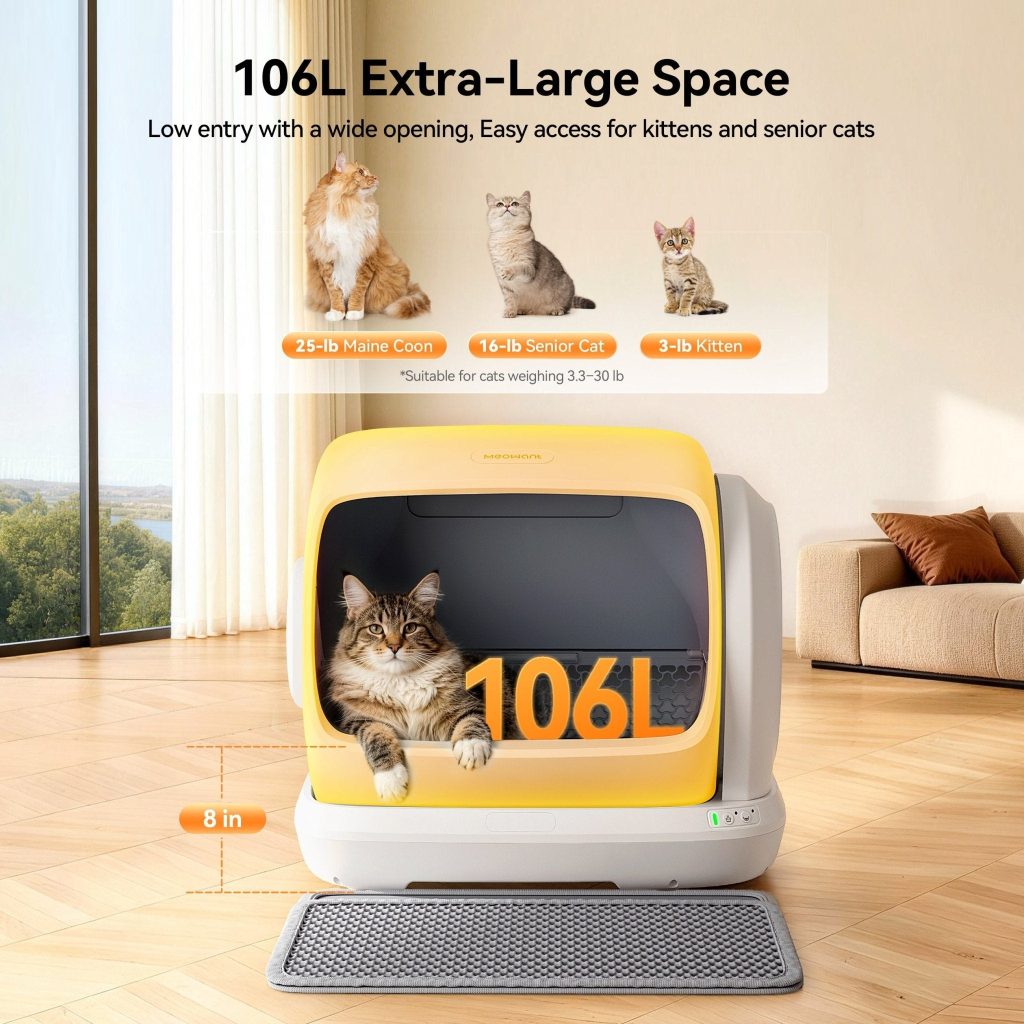
Once your cat has a clean bill of health, choosing the right automatic litter box becomes your next priority. Size is the most underestimated factor — the interior should allow your cat to turn around comfortably with room to spare. For multi-cat households, look for units with high-capacity waste drawers and per-cat identification through weight sensors. Brands like Meowant have built their automatic litter box designs around exactly these multi-cat considerations, making them a practical starting point when researching options. Noise level matters too, particularly for anxious cats; read reviews specifically from owners of skittish animals before committing to a model.
Placement and transition strategy determine whether your cat actually adopts the new box. Position it where the old box currently sits — cats are creatures of habit, and familiar location reduces resistance. Keep the original manual box available for the first one to two weeks while your cat explores the automatic unit at their own pace. Removing the old box too soon is the most common mistake owners make during this transition.
Once your cat is using the new box consistently, set up the companion health tracking app and create a profile for each cat. The app needs a baseline — typically one to two weeks of normal usage data — before it can meaningfully flag deviations. Check the dashboard every few days initially, then weekly once you’re familiar with each cat’s patterns. For the automatic unit itself, the main ongoing task is emptying the waste drawer and wiping sensors clean on a regular schedule, which most manufacturers specify in their guidelines. That’s the entirety of your new maintenance routine.
From Litter Box Frustration to Smarter Cat Care
The question “why is my cat pooping outside the litter box?” rarely has a simple answer — but it almost always has a solvable one. As we’ve explored, the frustration most cat owners experience traces back to the same predictable failures: inconsistent cleaning, inadequate odor control, and a manual maintenance routine that modern life simply doesn’t support. Traditional litter boxes don’t just create inconvenience — they actively create the conditions that drive cats away from using them.
Automatic litter boxes with integrated health tracking represent a genuine shift in how we care for our cats, not just a gadget upgrade. They remove the daily burden of scooping, maintain the consistent cleanliness cats require, and quietly collect health data that can catch serious conditions months before visible symptoms appear. For multi-cat households especially, that combination of reliability and insight transforms cat ownership from a reactive scramble into something genuinely manageable.
The path forward is clearer than it’s ever been. Rule out medical causes first, choose a unit that fits your household’s size and your cats’ temperaments, and give the transition the patience it deserves. Once your cats are using the new system consistently, the health tracking does the rest — giving you peace of mind and your cats a cleaner, more comfortable environment every single day. Smarter pet care isn’t a luxury anymore. It’s simply the better way.
