In modern industrial automation, reliable network communication isn’t just a convenience — it’s the backbone of operational efficiency. When drives, controllers, and I/O systems fail to communicate seamlessly, the consequences range from costly production delays to complete system failures. Project managers overseeing complex automation deployments know this challenge intimately, particularly when integrating variable-speed drives into existing infrastructure.
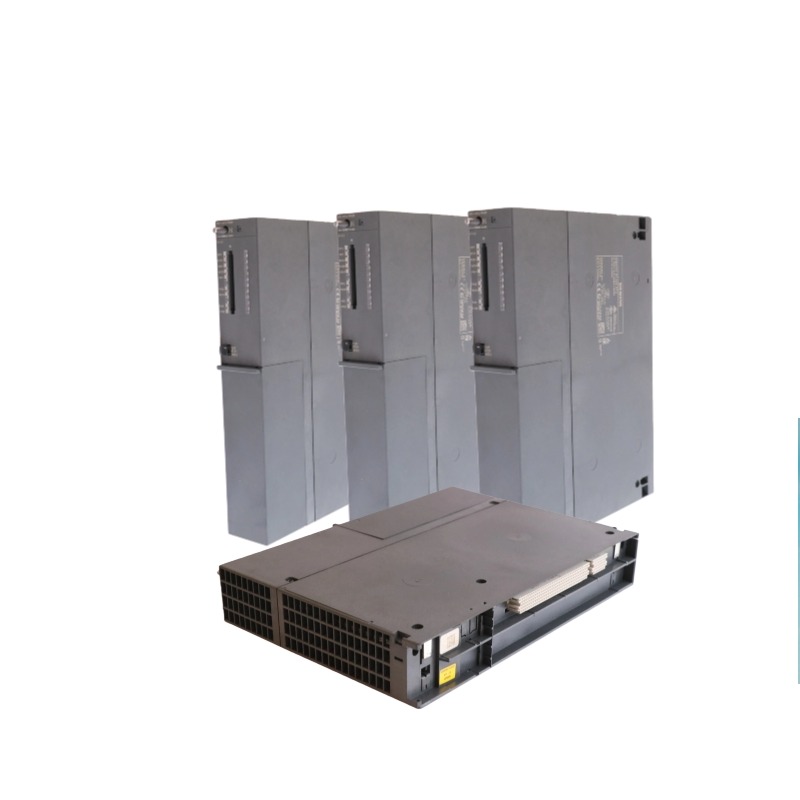
Siemens SIMOVERT drives have established themselves as a trusted solution for industrial motion control, offering robust performance across demanding applications. Yet even with high-quality hardware, achieving truly seamless network communication requires deliberate planning, proper configuration, and adherence to proven best practices.
This article delivers exactly that — actionable strategies for integrating Siemens SIMOVERT drives into automation projects, optimizing network communication with modular I/O stations, and ensuring reliable system interoperability. You’ll find guidance covering everything from pre-integration assessment and protocol selection to real-time monitoring and step-by-step deployment. Whether you’re starting a greenfield project or upgrading an existing system, the insights here will help you achieve stable, efficient, and scalable automation integration.
Understanding Siemens SIMOVERT and Network Communication Fundamentals
Siemens SIMOVERT drives represent a comprehensive family of variable-speed drive solutions designed for demanding industrial environments. These drives handle everything from basic motor control to complex motion coordination, making them a cornerstone of modern automation infrastructure. Their strength lies not just in power conversion efficiency but in their deep integration capabilities with broader automation ecosystems — including PLCs, SCADA systems, and distributed I/O networks.
At the heart of effective automation lies reliable network communication. Industrial networks typically operate across several architectural layers: field-level device communication, control-level data exchange, and plant-level monitoring. Common protocols governing these layers include PROFINET, PROFIBUS, Modbus TCP, and Ethernet/IP. Each serves specific use cases, with PROFINET emerging as the dominant choice for Siemens-centric environments due to its deterministic real-time performance and native compatibility with SIMOVERT hardware.
Seamless communication directly impacts system efficiency. When drives receive speed references, torque commands, or diagnostic queries without delay or data corruption, production lines maintain synchronization and reduce waste. Conversely, communication latency or packet loss can trigger drive faults, cause process deviations, or force unplanned shutdowns. Modular I/O stations — distributed hardware units collecting sensor signals and transmitting them over the network — play a critical supporting role here, extending the control system’s reach without adding communication complexity. Understanding how SIMOVERT drives interact with these stations through structured network topologies is the foundation for building any reliable automation system.
Strategies for Integrating Siemens SIMOVERT into Automation Projects
Successful integration of SIMOVERT drives into automation projects depends on structured planning rather than reactive problem-solving. Project managers who approach integration methodically — starting with a clear understanding of system requirements and working through configuration in deliberate phases — consistently achieve faster commissioning times and fewer post-deployment issues. Two areas deserve particular attention: the pre-integration assessment that shapes every downstream decision, and the design and configuration practices that determine long-term system stability.
Pre-Integration Assessment and Planning
Before any hardware arrives on-site, conduct a thorough audit of your existing network infrastructure. Document current bandwidth utilization, identify any legacy devices with limited protocol support, and map out physical cable routes and cabinet layouts. Cross-reference these findings against SIMOVERT drive specifications — particularly communication module options, supported protocols, and firmware requirements — to identify compatibility gaps early. Scalability deserves equal attention during this phase. If production capacity is expected to grow, design the network topology to accommodate additional drives and I/O stations without requiring a full redesign. Reserve IP address ranges, plan for managed switches with sufficient port density, and confirm that your PLC’s communication processor can handle projected network load. Documenting these decisions in a formal integration plan creates a reference point for every team member and simplifies future upgrades.
Design and Configuration Best Practices
When configuring SIMOVERT drives alongside modular I/O stations, consistency is critical. Assign logical device names and IP addresses according to a standardized naming convention before commissioning begins — this prevents address conflicts and simplifies troubleshooting later. Use Siemens TIA Portal to configure drive parameters and network settings within a single engineering environment, which reduces the risk of mismatched configurations between the drive and the controller. For modular I/O stations, verify that each station’s GSD or GSDML file is current and properly imported into the project. Set appropriate watchdog timers on all network devices so that communication failures trigger controlled fault responses rather than unpredictable behavior. Finally, validate every configuration in a staged test environment before deploying to the production floor, catching wiring errors and parameter mismatches at a stage where corrections remain straightforward.
Best Practices for Network Communication with Modular I/O Stations
Modular I/O stations serve as the sensory layer of any distributed automation system, collecting field-level signals and feeding them into the control network where SIMOVERT drives act on that data. When these stations communicate reliably, the entire system gains responsiveness and precision. When they don’t, even a well-configured drive can behave erratically. Optimizing this communication layer requires deliberate protocol selection, disciplined network architecture, and proactive monitoring practices.
Selecting and Implementing Communication Protocols
PROFINET stands out as the strongest choice for environments centered on Siemens hardware. Its isochronous real-time (IRT) mode delivers cycle times under one millisecond, making it suitable for motion-critical applications where SIMOVERT drives must respond to I/O changes with minimal delay. Ethernet/IP offers a viable alternative in mixed-vendor environments, particularly when Rockwell or other non-Siemens controllers are already present on the network. Modbus TCP remains relevant for simpler monitoring tasks but lacks the determinism needed for closed-loop drive control. Once you’ve selected a protocol, configure it consistently across all devices — set identical update rates on both the I/O station and the SIMOVERT drive’s communication module, and enable hardware timestamping on managed switches to preserve data sequence integrity. Test the configuration under simulated load conditions before live deployment, verifying that cycle times remain stable when network traffic peaks.
Monitoring and Troubleshooting Network Issues
Real-time monitoring transforms reactive troubleshooting into proactive maintenance. Use Siemens PRONETA or similar network analysis tools to continuously scan for topology changes, duplicate IP addresses, and degraded link speeds — conditions that often precede communication failures rather than appearing alongside them. Configure SNMP traps on managed switches to alert engineers when port error rates exceed acceptable thresholds. For SIMOVERT drives specifically, enable diagnostic buffers and review them regularly; drive-level logs frequently reveal intermittent communication timeouts that don’t yet trigger alarms but indicate developing problems. When faults do occur, isolate segments systematically — disconnect I/O stations one at a time to identify whether the issue originates at the field device, the switch, or the drive’s communication interface. Keeping firmware versions synchronized across all network participants eliminates a surprisingly common source of intermittent communication errors.
Ensuring Seamless Automation Integration
Achieving seamless automation integration goes beyond configuring individual components correctly — it requires validating that every element of the system works cohesively under real operating conditions. SIMOVERT drives, modular I/O stations, PLCs, and SCADA interfaces must function as a unified whole, not as isolated devices that happen to share a network.
System testing should follow a layered approach. Begin at the device level by confirming that each SIMOVERT drive responds correctly to commands from the controller and that I/O stations report accurate signal values. Progress to functional testing, where complete process sequences run under controlled conditions to verify that timing, interlocks, and fault responses behave as designed. Finally, conduct stress testing by simulating peak network loads and intentional communication disruptions — this reveals weaknesses that normal operating conditions never expose.
Interoperability checks deserve particular attention in mixed-component environments. When third-party devices share the network alongside Siemens hardware, verify that data types, byte ordering, and update cycles align across all participants. Mismatched data formats between a non-Siemens sensor and a SIMOVERT drive’s process data interface are a frequent source of subtle integration failures that only appear during specific operating conditions. In automotive manufacturing settings, for example, suppliers such as Apter Power — which produces components used across vehicle assembly lines — rely on precisely this kind of validated interoperability to ensure their production equipment communicates without error across multi-vendor automation networks.
The tangible benefits of thorough integration validation are significant. Production lines achieve higher throughput because drives respond predictably to process demands. Unplanned downtime decreases when fault responses are tested and confirmed before live operation begins. Maintenance teams gain confidence working with a system whose behavior is documented and understood. Ultimately, the investment in rigorous integration testing pays dividends through reduced commissioning delays, lower long-term maintenance costs, and a more resilient automation infrastructure capable of supporting future capacity expansions.
Step-by-Step Solution Implementation for Project Managers
Translating strategy into execution requires a structured sequence that project managers can follow from initial scoping through live deployment. Start with requirement analysis: document the number of drives and I/O stations, define cycle time expectations, and confirm which communication protocols your existing infrastructure supports. This baseline determines every hardware and software decision that follows.
With requirements confirmed, move to hardware and software setup. Install SIMOVERT communication modules matching your chosen protocol, mount modular I/O stations at field locations, and load the latest firmware on all devices before configuration begins. In TIA Portal, create a new project, import current GSDML files for each I/O station, and add SIMOVERT drives using their hardware catalog entries — this ensures parameter sets align with actual hardware revisions.
Network configuration comes next. Assign device names and IP addresses following your documented naming convention, configure PROFINET update cycles consistently across drives and I/O stations, and set watchdog timers on every network participant. Enable diagnostic buffers on SIMOVERT drives and configure SNMP monitoring on managed switches before any live traffic runs.
Testing follows a three-stage sequence: device-level verification confirms individual communication links, functional testing validates complete process sequences, and stress testing exposes weaknesses under peak load. Use PRONETA to scan for topology anomalies between each stage. Document every test result formally — this record supports both commissioning sign-off and future maintenance reference. Siemens Industry Online Support provides firmware release notes, application examples, and technical FAQs that resolve edge-case issues encountered during this phase. Once all stages pass, deploy to production with a monitored startup period before handing the system to operations.
Building Reliable Automation Systems with SIMOVERT Integration
Seamless network communication in industrial automation isn’t achieved by chance — it’s the result of deliberate planning, disciplined configuration, and rigorous validation. Throughout this article, we’ve examined how Siemens SIMOVERT drives integrate into automation ecosystems, from foundational network architecture through protocol selection, modular I/O station optimization, and step-by-step deployment guidance. Each strategy builds on the last, forming a cohesive framework that project managers can apply directly to real-world deployments.
The structured approach matters because the stakes are high. Communication failures don’t just interrupt production — they erode confidence in the entire automation investment. By conducting thorough pre-integration assessments, configuring devices consistently within TIA Portal, monitoring network health proactively, and validating system behavior before live operation begins, teams dramatically reduce the risk of costly surprises after commissioning.
The benefits extend well beyond launch day. Systems built on these principles are easier to maintain, simpler to expand, and more resilient when unexpected conditions arise. Project managers who apply these insights position their organizations for long-term operational success — with automation infrastructure that scales alongside growing production demands. Start with the assessment phase, follow the configuration and testing sequence, and let the results speak for themselves.
