Interior French doors have long served as defining architectural elements, capable of transforming ordinary spaces into elegant, light-filled environments that connect rooms while maintaining distinct zones. For architects, these doors represent far more than functional barriers—they are design statements that communicate style, craftsmanship, and spatial intelligence. Yet selecting the right interior French doors presents a familiar challenge: achieving the delicate balance between visual impact and lasting performance. The wrong material choice or poorly considered design can undermine an entire project’s aesthetic cohesion, while the right selection elevates both form and function. This guide offers architects a comprehensive framework for navigating the selection process, from material evaluation and style alignment to innovative building material solutions that meet modern sustainability demands. Whether you’re specifying doors for a luxury residential renovation or a commercial hospitality project, the insights ahead will help you make confident, informed decisions that satisfy clients and stand the test of time.
Understanding the Role of Interior French Doors in Architectural Design
Interior French doors function as architectural bridges, dissolving rigid boundaries between rooms while preserving each space’s identity. Their defining characteristic—expansive glass panels framed by elegant stiles and rails—invites natural light to travel deep into floor plans, reducing dependence on artificial lighting and creating a sense of openness that clients consistently value. In open-concept layouts, they offer the flexibility to close off a home office or dining room without sacrificing visual continuity. Historically rooted in 17th-century French Renaissance architecture, these doors were originally designed to bring outdoor light into grand estates. Today’s adaptations honor that legacy while embracing modern performance standards, incorporating improved thermal efficiency and sound attenuation. For architects, specifying interior French doors signals intentionality—a commitment to spatial generosity that elevates client satisfaction and distinguishes a project from conventional design approaches. Their versatility across residential, hospitality, and commercial interiors makes them one of the most consistently impactful design elements available.
Key Design and Style Considerations for Architects
Selecting interior French doors that resonate with a project’s overarching design language requires careful attention to stylistic coherence. Whether the brief calls for traditional warmth, contemporary minimalism, or a transitional blend, the door’s proportions, glazing patterns, and finish palette must reinforce the intended narrative rather than compete with it. Architects should evaluate how door profiles interact with surrounding millwork, ceiling heights, and flooring transitions to ensure seamless integration.
Traditional vs. Modern French Door Styles
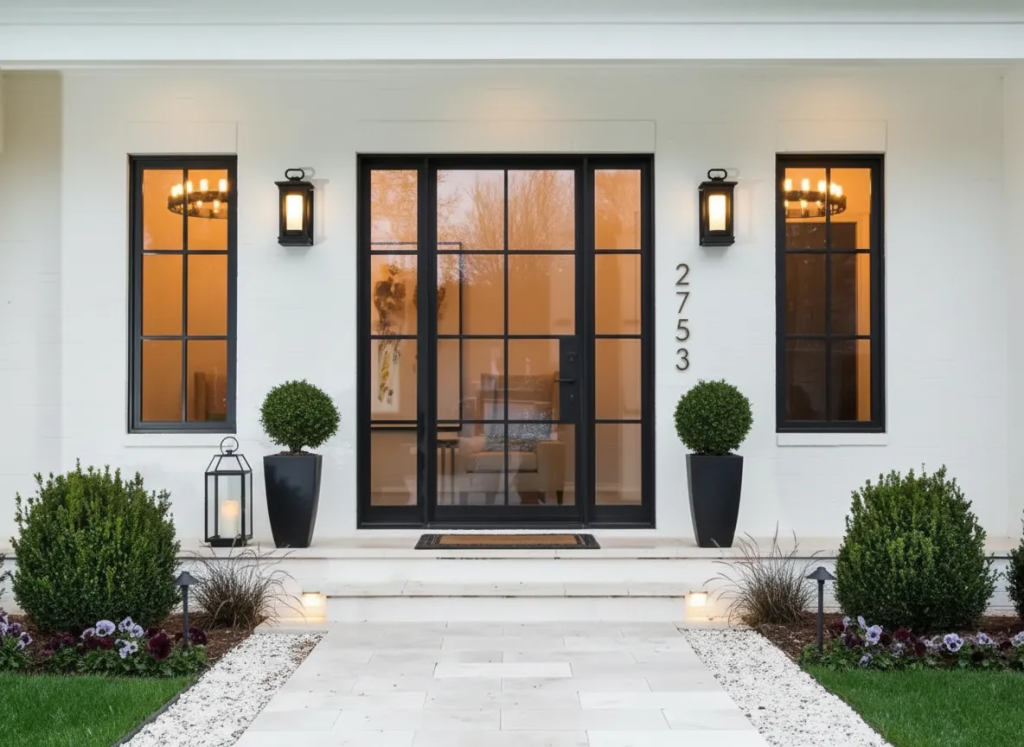
Classic French door designs feature divided-light configurations—typically six, ten, or fifteen individual glass panes separated by muntins that cast intricate shadow patterns throughout the day. These suit heritage restorations, country estates, and projects where ornamental detail reinforces character. Solid wood frames with raised or recessed panel detailing at the bottom rail complete the traditional expression. Modern interpretations strip away visual complexity, favoring full-height single glass panels within narrow stile profiles that maximize transparency. Black steel-look frames or clean white lacquer finishes align with contemporary and industrial aesthetics, while slim sightlines create an almost frameless appearance that suits minimalist interiors. Transitional projects benefit from simplified muntin grids or simulated divided lights that reference tradition without overwhelming cleaner architectural lines.
Customization for Unique Project Requirements
Bespoke sizing addresses non-standard openings common in renovation work, where existing rough openings rarely conform to catalog dimensions. Custom height and width specifications ensure proper proportion relative to room scale—an eight-foot ceiling demands a taller door than standard offerings provide. Hardware selection, from lever handles in brushed brass to concealed pivot hinges, contributes significantly to the final aesthetic. Color matching through RAL or custom paint formulations allows doors to either blend with wall surfaces or stand as deliberate accent elements. Architects should also consider astragal profiles on double-door pairs, choosing between T-astragals for traditional projects and flush bolts for contemporary applications where clean meeting stiles are essential.
Material Selection: Ensuring Durability and Aesthetic Appeal
The building materials specified for interior French doors determine not only their visual character but their long-term performance under daily use. Unlike an aluminum alloy sliding door designed primarily for smooth operation and weather resistance, interior French doors must balance structural integrity with fine aesthetic detailing—a combination that demands thoughtful material evaluation. Architects face a spectrum of choices, each carrying distinct implications for durability, maintenance burden, and design flexibility.
Wood Options and Their Longevity
Oak remains the benchmark for interior French doors, offering exceptional hardness, dimensional stability, and a grain pattern that accepts both stained and painted finishes with equal grace. Its natural resistance to denting makes it ideal for high-traffic residential and hospitality settings where doors see frequent operation. Mahogany delivers richer tonal depth and superior workability for intricate profile details, though its higher cost positions it firmly in luxury applications. Pine offers budget-conscious projects a viable alternative—lightweight and easy to machine—but its softness demands protective finishes and more frequent maintenance to prevent surface damage. Engineered wood cores wrapped in hardwood veneers present a compelling middle ground, resisting the warping and seasonal movement that plague solid timber in climate-controlled environments. For projects where sustainability certifications matter, FSC-certified timber options satisfy both environmental commitments and performance requirements without compromising the refined appearance clients expect.
Glass and Panel Variations for Light and Privacy
Clear tempered glass maximizes light transmission between rooms and suits open social areas where visual connectivity is desirable. Frosted or acid-etched glass diffuses light while obscuring direct sightlines, making it appropriate for home offices, bedrooms, or therapy rooms where privacy supports function. Reeded and fluted glass options have gained popularity in transitional and contemporary projects, offering textural interest that filters views without complete opacity. Low-iron glass eliminates the green tint common in standard float glass, ensuring true color rendering—a detail that matters when doors frame curated interior vistas. Panel configurations range from full-lite designs that prioritize openness to raised-panel bottom rails that add visual weight and protect against foot traffic impact. Architects should specify safety-rated glass in all applications, particularly where doors serve households with children or high-occupancy commercial spaces where building codes mandate impact resistance.
Innovative Building Material Solutions for Modern Projects
The building materials landscape for interior French doors is evolving rapidly, driven by architects who demand both environmental responsibility and superior performance. Thermally modified timber, processed through controlled heat treatment rather than chemical preservatives, delivers enhanced dimensional stability and decay resistance while maintaining the warmth of natural wood—a compelling option for projects pursuing LEED or BREEAM certification. Electrochromic smart glass represents another frontier, allowing occupants to adjust transparency on demand through integrated controls, eliminating the need to choose permanently between openness and privacy. Bio-based composite materials, combining recycled wood fibers with plant-derived resins, now achieve structural performance comparable to traditional engineered wood while significantly reducing embodied carbon. Cross-laminated bamboo has emerged as a credible alternative to hardwood, offering remarkable tensile strength with rapid renewability. For architects committed to innovation, these solutions expand the design vocabulary without sacrificing the elegance that defines interior French doors, enabling projects to meet increasingly stringent sustainability targets while delivering the refined aesthetic that discerning clients expect.
Building a Cohesive Door Collection for Your Project
A thoughtfully curated door collection unifies a project’s interior architecture in ways that individual door selections simply cannot achieve. When specifying interior French doors, architects should consider how these elements relate to every other door within the space—entry doors, pocket doors, barn-style sliders, and closet doors all contribute to the visual rhythm a client experiences moving through their home or commercial environment. Start by establishing a consistent material and finish language: if your French doors feature white oak with a natural matte finish, carry that species and tone into adjacent passage doors and transom details. Hardware coordination matters equally—matching rosette profiles, lever styles, and metal finishes across the entire door collection creates the kind of quiet coherence that distinguishes professionally designed spaces from piecemeal renovations. Where functional requirements differ, maintain unity through shared proportions and profile geometries rather than identical construction. A sliding door serving a pantry can echo the stile width and glass type of nearby French doors without replicating them entirely. Architects who present clients with a holistic door collection strategy early in the design development phase avoid costly mid-project substitutions and ensure that the interior French doors anchoring primary living spaces feel like an intentional part of a larger, carefully orchestrated whole.
Enhancing Security: From Interior to Outdoor Considerations
While interior French doors primarily serve aesthetic and spatial purposes, their security performance deserves careful architectural consideration—particularly when they separate zones with varying access requirements or when their design language extends to exterior applications where outdoor security becomes paramount. Multi-point locking systems, concealed within slim stile profiles, provide robust resistance against forced entry without compromising the clean lines that define French door elegance. Architects should specify hardened steel lock bodies and strike plates even on interior applications serving home offices containing sensitive materials or connecting to garage entries. Smart lock integration allows doors to participate in broader home automation ecosystems, enabling remote monitoring and access control that clients increasingly expect. Material choices directly influence security performance: solid hardwood stiles resist kick-in attempts far more effectively than hollow-core alternatives, while laminated safety glass maintains barrier integrity even when fractured. For projects where interior French doors transition toward exterior-adjacent spaces—sunrooms, covered porticos, or breezeway connections—pairing elegant glazed panels with concealed security sensors and reinforced hinges ensures that beauty never compromises occupant safety.
Step-by-Step Guide to Selecting Your Interior French Doors
Begin by conducting a thorough assessment of project requirements and client expectations. Document each opening’s dimensions, traffic patterns, acoustic needs, and the degree of visual connectivity desired between adjacent rooms. This foundational step prevents costly specification changes later and ensures every door serves its intended purpose. Next, evaluate material durability alongside style options by requesting physical samples from manufacturers—digital renderings rarely capture how grain patterns, glass textures, and finish sheens perform under actual lighting conditions. Test hardware mechanisms in person to confirm smooth operation and tactile quality that matches the project’s caliber. With your material and design criteria established, compare suppliers such as GeorgeBuild by examining their full door collection offerings rather than evaluating individual products in isolation. A supplier whose catalog includes complementary passage doors, transoms, and sidelights simplifies coordination and ensures consistent quality across every opening in the project. Before finalizing, address installation logistics and long-term maintenance requirements with your contractor and client. Confirm that rough openings accommodate chosen door dimensions with appropriate clearances, and verify that selected finishes align with the client’s willingness to maintain them over time. Finally, reconcile your selections against the project budget and construction timeline, prioritizing doors in primary living spaces where interior French doors deliver the greatest visual return, then applying the same design language to secondary spaces through simpler, cost-effective variations that maintain architectural coherence throughout.
Aligning Material, Design, and Innovation for Lasting French Door Excellence
Selecting the best interior French doors for any architectural project ultimately comes down to aligning three critical dimensions: material integrity, design coherence, and forward-thinking innovation. The building materials you specify—whether traditional hardwoods, engineered composites, or emerging sustainable alternatives like thermally modified timber and bio-based resins—must deliver lasting durability without compromising the refined aesthetic that makes French doors such compelling design elements. Style decisions, from muntin configurations and glass types to hardware finishes and astragal profiles, should reinforce the project’s broader architectural narrative rather than exist as isolated choices. Building a cohesive door collection that extends this design language across every opening in the space transforms individual selections into a unified spatial experience that clients immediately recognize as intentional and professionally orchestrated. Security considerations, particularly where interior doors interface with exterior-adjacent zones, ensure that elegance and occupant safety coexist seamlessly. By following the step-by-step selection framework outlined in this guide—beginning with thorough requirement documentation, progressing through hands-on material evaluation and supplier comparison, and concluding with careful budget reconciliation—architects can approach interior French door specification with the confidence that every decision serves both the immediate design vision and the project’s long-term success.
