Professional landscaping has never been more demanding. Clients expect pristine results across properties that feature steep hillsides, narrow corridors, and terrain that pushes traditional equipment to its limits. Meanwhile, labor shortages, rising fuel costs, and the relentless pressure to complete more jobs in less time squeeze profit margins thinner each season. For landscape professionals searching for a competitive edge, the question isn’t whether to adopt new technology—it’s which technology delivers real results. Remote controlled mowers and robot lawn mowers have emerged as potentially transformative tools, moving beyond residential novelty into serious professional-grade landscaping equipment. This article examines how these machines address the specific pain points that landscape professionals face daily, from conquering extreme terrain to achieving meaningful maintenance reduction. Whether you manage a small crew or oversee large-scale commercial operations, understanding what this technology offers—and how to implement it effectively—could reshape the way you approach every property on your schedule.
The Current Landscape: Challenges Faced by Professional Landscapers
Today’s professional landscapers confront properties that grow more complex with each contract signed. Residential developments built into hillsides, commercial campuses with elaborate grading, and municipal properties featuring retention ponds and steep embankments all demand solutions that traditional push mowers and ride-on equipment struggle to deliver. The industry faces a convergence of pressures that make the status quo increasingly unsustainable.
Managing Extreme Terrain and Complex Landscapes
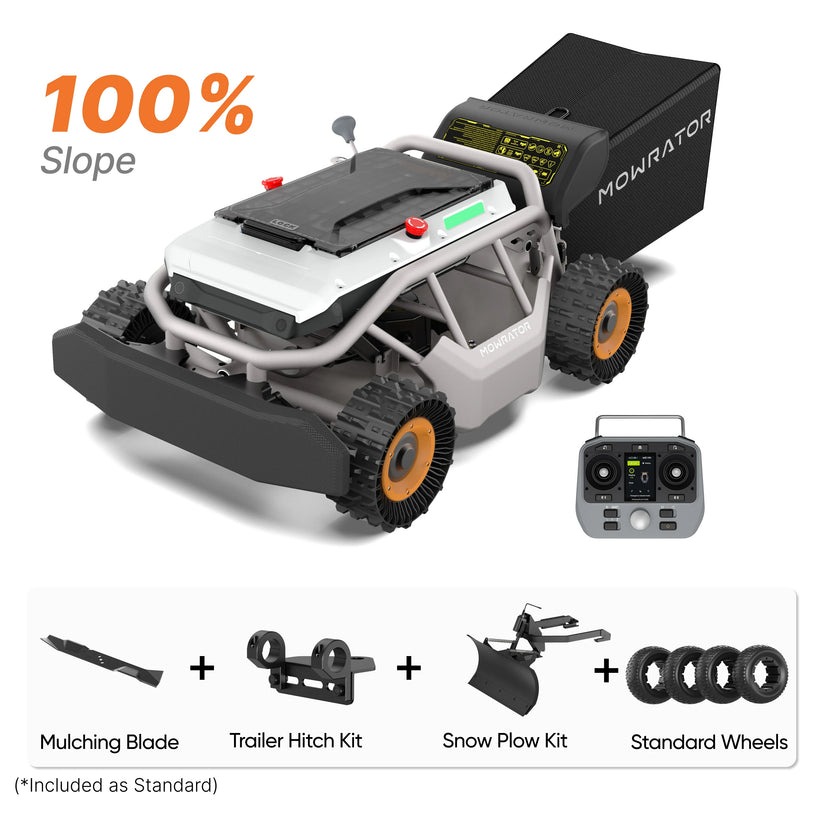
Steep slopes represent one of the most persistent hazards in professional landscaping. Operating a traditional mower on grades exceeding 15 degrees puts operators at genuine risk of rollover or loss of control, and many manufacturers explicitly warn against use on such terrain. Beyond safety concerns, tight spaces between hardscape features, garden beds, and structures force crews to switch between multiple pieces of equipment or resort to time-consuming string trimming. Standard landscaping equipment also takes a beating on uneven ground—bent blades, damaged decks, and premature drivetrain wear accumulate quickly when machines are pushed beyond their design parameters.
High Maintenance Costs and Time Consumption
Manual mowing on difficult properties often doubles or triples the labor hours compared to flat, open turf. Crews spend significant time repositioning equipment, making multiple passes on slopes for safety, and hand-finishing areas that machines cannot reach. This translates directly into higher payroll costs per property. Equipment maintenance compounds the problem: machines working on extreme terrain require more frequent blade replacements, hydraulic repairs, and engine servicing. When a key piece of equipment goes down mid-season, the cascading effect on scheduling and client satisfaction erodes profitability far beyond the repair bill itself. These inefficiencies create an urgent need for technology that can reduce both human effort and mechanical strain.
Introducing Remote Controlled Mowers: A Technological Revolution
The equipment landscape for professional mowing has shifted dramatically in recent years. What began as a convenience product for homeowners with small yards has matured into a category of rugged, professional-grade landscaping equipment capable of tackling the most demanding commercial and municipal properties. Understanding the distinctions within this category—and the technology driving it forward—helps landscape professionals make informed decisions about where these machines fit in their operations.
What Are Remote Controlled and Robot Lawn Mowers?
Remote controlled mowers and robot lawn mowers serve similar purposes but operate through fundamentally different approaches. A remote controlled lawn mower relies on a human operator who guides the machine from a safe distance using a handheld transmitter or tablet interface. The operator maintains full control over speed, direction, and cutting engagement, making these machines ideal for hazardous slopes and irregular terrain where real-time human judgment matters. Robot lawn mowers, by contrast, operate autonomously within predefined boundaries. Once programmed, they navigate independently using onboard sensors, cutting on scheduled intervals without direct supervision. In professional settings, remote controlled units tend to excel on high-risk or variable terrain where adaptability is essential, while autonomous robots prove most valuable for recurring maintenance on defined areas—think corporate campuses, sports complexes, or gated communities where consistent coverage on a predictable schedule delivers the greatest return.
Key Features and Capabilities
Modern professional-grade units share several capabilities that separate them from earlier consumer models. All-terrain adaptability stands at the forefront, with many machines engineered to operate safely on slopes of 30 degrees or steeper thanks to low centers of gravity, aggressive track systems, and advanced traction control. GPS navigation and RTK positioning allow both remote controlled and autonomous models to map properties with centimeter-level accuracy, ensuring complete coverage without overlap or missed strips. Programmable schedules enable robot mowers to work during off-hours—early mornings or evenings—minimizing disruption to property occupants. Integration with other smart landscaping equipment through fleet management software lets operators monitor battery status, blade condition, and mowing progress across multiple machines from a single dashboard. These features collectively represent a leap from simple radio-controlled novelties to sophisticated tools that professional crews can deploy with confidence alongside their existing equipment fleet.
Transforming Professional Landscaping: Key Benefits and Advantages
Understanding what remote controlled mowers can do matters far less than understanding what they change in daily operations. The real value emerges when these machines directly address the pain points that erode profitability and limit growth for landscape professionals. Across three critical dimensions—efficiency, cost structure, and service quality—the impact is both measurable and meaningful.
Enhanced Efficiency in Handling Extreme Landscapes
Remote controlled mowers fundamentally alter how crews approach difficult terrain. Instead of sending an operator onto a steep embankment with a walk-behind mower—requiring slow, cautious passes and frequent repositioning—a single crew member can guide a tracked remote unit from stable ground at the top or bottom of the slope. The machine maintains consistent speed and cutting height regardless of grade, completing slopes in a fraction of the time while the operator simultaneously monitors the surroundings. On properties with tight corridors between retaining walls, fence lines, or ornamental plantings, compact remote units navigate spaces that would otherwise require hand trimming. This means fewer equipment changes per property and less time spent on finishing work that traditionally eats into the schedule.
Significant Reduction in Maintenance Time and Costs
The maintenance reduction these machines deliver operates on multiple levels. Labor hours drop substantially when one operator and a remote mower replace a two- or three-person crew on hazardous terrain. Fuel costs decline as electric-powered models handle properties that previously required gas-hungry commercial mowers running at high RPM on challenging ground. The equipment itself benefits too—purpose-built remote mowers designed for extreme conditions experience less structural stress than traditional machines forced into roles they were never engineered for, which translates into fewer unplanned repairs and longer service intervals. Over a full season, these cumulative savings shift the cost-per-property equation significantly in favor of crews that have integrated this technology into their workflow.
Improved Safety, Precision, and Client Satisfaction
Removing operators from dangerous slopes and unstable terrain is perhaps the most compelling advantage. Fewer injury incidents mean lower insurance premiums, reduced workers’ compensation claims, and less crew downtime. Beyond safety, the precision of GPS-guided cutting paths produces a visibly uniform finish that hand-operated equipment on difficult terrain rarely achieves. Clients notice the difference—clean stripe patterns on hillsides and consistent edge lines around obstacles communicate a level of professionalism that strengthens retention and justifies premium pricing. Property managers increasingly expect their landscaping partners to leverage advanced technology, and demonstrating the use of sophisticated landscaping equipment during site visits or proposal presentations creates a tangible competitive differentiator that resonates with decision-makers evaluating multiple bids.
Practical Solutions: Implementing Remote Controlled Mowers in Your Landscaping Business
Recognizing the benefits of remote controlled mowers is only the first step. The real transformation happens when landscape professionals move from interest to implementation with a structured approach that minimizes disruption and accelerates return on investment. Successful adoption requires honest assessment of current operations, careful equipment selection, and a commitment to integrating new technology into established workflows rather than simply adding another tool to the trailer.
Step-by-Step Guide to Adoption and Integration
Start by auditing your current workflow to identify where remote controlled mowers deliver the fastest payback. Properties with steep grades, confined areas requiring excessive hand trimming, or sites where safety incidents have occurred represent ideal candidates for initial deployment. Next, research models specifically engineered for the terrain types dominating your route—a machine built for 35-degree embankments serves different needs than one optimized for flat commercial campuses with tight obstacles. Brands like MOWRATOR have developed remote controlled mowers with the kind of rugged, slope-ready design that professional crews demand for challenging terrain. Once you’ve narrowed options, arrange a pilot test on two or three properties that represent your most challenging work. Run the equipment alongside your existing process for several weeks, tracking labor hours, fuel consumption, and finish quality side by side. Use this data to build a clear performance baseline. Before scaling up, invest in thorough staff training covering not just machine operation but also safety protocols, troubleshooting procedures, and basic field maintenance. Finally, integrate the equipment into your regular scheduling system, assigning specific properties or terrain types to the remote mower and monitoring performance metrics weekly during the first season to identify optimization opportunities.
Choosing the Right Equipment for Specific Needs
Equipment selection should be driven by the actual conditions your crews encounter rather than specification sheets alone. Battery life matters most for crews servicing multiple properties per day without convenient charging access—look for units offering enough runtime to complete your most demanding sites on a single charge. Cutting width involves a direct tradeoff: wider decks cover open slopes faster but sacrifice maneuverability in tight spaces, so match deck size to your predominant property type. Durability for extreme landscapes means examining track or wheel construction, frame materials, and the quality of sealed components that resist water, mud, and debris intrusion. Equally important is compatibility with your existing landscaping equipment ecosystem—machines that integrate with fleet management platforms you already use reduce administrative overhead and simplify crew coordination across mixed-equipment operations.
Overcoming Challenges and Maximizing ROI
The initial investment represents the most common hesitation, but framing the purchase against quantified labor savings on specific properties typically reveals a payback period of one to two full seasons for crews handling regular slope work. Address the technical learning curve by designating one or two crew members as primary operators during the pilot phase, allowing them to develop proficiency before broader team training. Maintenance of the remote mower itself requires attention but follows predictable patterns—blade replacement schedules, battery conditioning protocols, and periodic track or wheel inspection keep unplanned downtime minimal. To maximize long-term ROI, continuously expand the machine’s role as your team gains confidence, gradually shifting additional properties from traditional methods to remote operation. Track your cost-per-property data quarterly and use documented efficiency gains when bidding on new contracts that feature the challenging terrain where these machines excel, effectively turning your technology investment into a business development advantage.
Remote Controlled Mowers Are Reshaping the Future of Professional Landscaping
Remote controlled mowers and robot lawn mowers have moved well beyond experimental curiosity into proven professional landscaping equipment that delivers measurable results where it matters most. They directly solve the challenges that squeeze margins tightest—dangerous slope work that demands excessive labor hours, terrain that destroys conventional machines, and the constant pressure to deliver flawless results on increasingly complex properties. The efficiency gains are concrete: fewer crew members exposed to hazardous conditions, reduced fuel and repair expenditures, and faster completion times on the properties that traditionally consume disproportionate resources. For landscape professionals willing to approach adoption strategically—starting with targeted deployment on their most demanding sites and scaling based on documented performance data—the technology reshapes not just how work gets done but which contracts become profitable to pursue. As client expectations continue rising and labor markets remain tight, the businesses that integrate these tools effectively will set the competitive standard others struggle to match. The transformation isn’t theoretical; it’s already underway on slopes, embankments, and complex properties where forward-thinking crews have made the shift.
