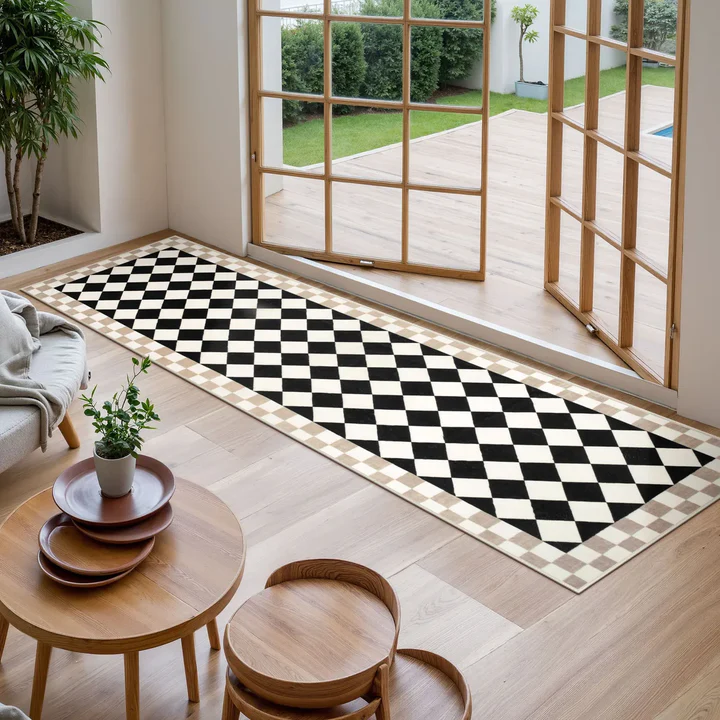
You’ve rearranged the furniture three times, tested four paint samples, and still something feels off. For many homeowners and design enthusiasts, the rug is often the missing puzzle piece — too bold, too bland, or simply impossible to coordinate with everything else in the room. Finding a design that bridges different furniture styles, works across seasons, and holds up to daily life can feel like an endless search.
Checkerboard rugs offer a surprisingly elegant answer to these common dilemmas. Their geometric pattern carries a timeless quality that feels equally at home in a sleek modern apartment and a warmly furnished traditional living room. The classic two-tone structure, especially in neutral colorways, gives you a strong visual anchor without overwhelming your existing decor.
This article walks you through everything you need to make the most of a checkerboard rug. From practical styling ideas for pairing with different furniture types, to simple seasonal refresh strategies, to straightforward care routines that preserve your rug’s appearance — consider this your complete guide to confidently styling one of interior design’s most enduring patterns.
Why Checkerboard Rugs Are a Design Game-Changer
Few patterns in interior design carry the staying power of the checkerboard. While trends cycle through maximalist prints and abstract forms, the simple alternating grid has remained a fixture in well-designed homes for centuries — appearing in Renaissance paintings, mid-century modern interiors, and contemporary loft apartments alike. That kind of longevity isn’t accidental. The checkerboard pattern strikes a rare balance: it’s visually interesting enough to anchor a room, yet structured enough to never feel chaotic.
Much of this versatility comes down to geometry. The repeating squares create a rhythm that the eye finds naturally satisfying, drawing attention without demanding it. When rendered in neutral tones — think cream and taupe, ivory and charcoal, or soft grey and white — this rhythm becomes even more adaptable. A neutral checkerboard rug doesn’t compete with your existing color palette; it complements it. Whether your walls are painted a deep navy or a warm terracotta, the rug finds a way to belong.
What truly sets checkerboard rugs apart as a foundational design element is their ability to serve both bold and understated decor themes simultaneously. In a room filled with maximalist artwork and layered textiles, the geometric pattern provides visual order — a calm grid beneath the creative noise. In a minimalist space, that same pattern becomes the statement piece, delivering personality without clutter. This dual nature makes checkerboard rugs one of the few design choices that genuinely works across aesthetics rather than locking you into one.
Creative Rug Styling Ideas for Every Room
A checkerboard rug can do heavy lifting in any room, but only when you treat it as an active design partner rather than an afterthought. The key is thinking about three things before you place it: scale, balance, and how the pattern interacts with what’s already in the space. A small checkerboard in a large open-plan living area will feel lost, while an oversized grid in a compact bedroom can feel oppressive. Getting the proportions right is your first step toward a room that looks intentional.
In living rooms, the rug should anchor the seating arrangement. Position it so that at least the front legs of your sofa and chairs rest on the surface — this visually connects the furniture into a cohesive grouping rather than leaving pieces floating. In dining areas, size up generously so chairs remain on the rug even when pulled out. For bedrooms, a large rug extending well beyond the bed frame on three sides creates a grounded, luxurious feel that smaller rugs simply can’t achieve.
Pattern mixing is another area where checkerboard rugs genuinely excel. Because the geometric grid is structured and regular, it pairs well with organic patterns like florals or abstract prints rather than competing with them. The rule of thumb: vary the scale. A bold, large-square checkerboard can sit comfortably alongside small-scale floral cushions or a subtly striped throw. Keeping your secondary patterns smaller in scale lets the rug hold visual authority without creating chaos.
Pairing with Modern and Minimalist Furniture
In a minimalist space, a checkerboard rug introduces geometric interest without disrupting the clean aesthetic. Choose a rug where the squares are relatively small to medium in scale — this adds visual texture without feeling loud. Position it centrally beneath your furniture arrangement, ensuring clean borders of flooring are visible on all sides. This breathing room reinforces the minimal feel while letting the pattern do its work. Stick to a two-tone neutral palette, such as white and light grey, to maintain the understated atmosphere that modern furniture demands. Brands like Lahome offer checkerboard styles in precisely these kinds of refined neutral colorways, making it easier to find an option that fits without extensive searching.
Complementing Traditional and Classic Styles
Ornate traditional furniture — carved wood frames, cabriole legs, rich upholstery — can sometimes feel heavy. A neutral checkerboard rug grounds the arrangement without adding more visual weight. Choose warmer tones like cream and taupe or ivory and soft brown to echo the warmth already present in wood finishes and fabric upholstery. Layer a smaller patterned rug or a natural-fiber runner over the checkerboard to add depth and reinforce the traditional layered aesthetic. The grid provides order beneath the decorative richness above.
Enhancing Eclectic and Bohemian Spaces
Eclectic rooms thrive on variety, but without structure they can tip into disorder. A checkerboard rug acts as a unifying anchor, giving the eye a reliable resting point amid the mix of colors, textures, and collected objects. Place it centrally and let your vibrant accessories — embroidered cushions, ceramic vases, woven wall hangings — radiate outward from it. The rug’s regularity creates an invisible framework that makes even the most adventurous combinations feel curated rather than chaotic.
Seasonal Home Decor Transformations with Your Rug
One of the most underrated qualities of a checkerboard rug is how naturally it adapts to seasonal shifts in your home. Because the pattern itself is neutral and geometric, it doesn’t lock you into a single mood — the atmosphere around it changes based on what you layer nearby. Rather than swapping out your rug with every season, you can keep it as a constant foundation and rotate the supporting elements: cushions, throws, curtains, and decorative objects. This approach saves money, reduces effort, and keeps your space feeling fresh without requiring a full redesign every few months.
The key to successful seasonal transitions is thinking in terms of color temperature and texture rather than wholesale change. Warm tones and heavy fabrics naturally evoke autumn and winter; cool hues and lightweight materials signal spring and summer. Your checkerboard rug bridges these shifts effortlessly because its structured pattern reads as grounded in any context. A cream and grey checkerboard looks crisp and breezy surrounded by linen cushions in April, then sophisticated and cozy when flanked by deep amber throws in November — same rug, entirely different feeling.
Spring and Summer: Light and Airy Vibes
When warmer months arrive, let your checkerboard rug breathe by pairing it with soft pastel accessories — dusty rose cushions, sage green throws, or pale yellow ceramic accents work particularly well against neutral grid tones. Swap heavy curtains for sheer linen panels to maximize natural light, which will make the rug’s lighter squares appear even crisper. If your rug sits in a sun-filled room, consider repositioning it slightly away from direct window exposure to protect the fibers while still keeping it central to the arrangement. Introduce natural materials like rattan, jute, or light wood alongside the rug to reinforce that breezy, organic warmth that defines well-styled spring and summer interiors.
Fall and Winter: Cozy and Warm Atmospheres
As temperatures drop, build warmth around your checkerboard rug through strategic layering. Place a smaller, plush sheepskin or wool rug on top of one corner of the checkerboard — this adds tactile softness and visual depth without obscuring the base pattern entirely. Introduce deep, saturated tones through cushions in burnt orange, forest green, or burgundy, and drape a chunky knit throw over your sofa’s armrest so it cascades toward the rug. Swap out lighter ceramic or glass decor for heavier materials like hammered brass, dark pottery, or candle groupings. These surrounding changes shift the room’s emotional temperature dramatically, making your checkerboard rug feel like the grounded center of a genuinely snug winter retreat.
Practical Rug Care Tips for Lasting Beauty
A checkerboard rug’s visual impact depends entirely on how well it holds up over time. The crisp contrast between alternating squares — the very quality that makes the pattern so striking — is also what reveals neglect most quickly. Dirt, fading, and fiber damage don’t just affect the rug’s texture; they dull the pattern itself, softening edges that should remain sharp. Treating care as part of your design investment, rather than a chore, keeps the rug performing as a genuine style asset for years rather than months.
The material of your rug determines how aggressive or gentle your approach should be. Wool checkerboard rugs require more careful handling than polypropylene or cotton versions, but reward that care with exceptional durability. Before committing to any cleaning method, check the manufacturer’s label — it will tell you whether the rug is safe for wet cleaning, which products to avoid, and whether professional cleaning is recommended. Knowing this upfront prevents accidental damage that’s often irreversible.
Beyond cleaning, two habits make the biggest difference in long-term preservation: rotation and protection. Rotating your rug 180 degrees every three to six months ensures that foot traffic and sunlight exposure are distributed evenly across the surface. Without rotation, the high-traffic zones and sun-facing sections fade and wear faster, creating uneven discoloration that disrupts the checkerboard’s symmetry. Pair rotation with a quality rug pad underneath — this reduces friction against the floor, prevents slipping, and cushions the fibers against compression from furniture legs.
Routine Cleaning and Preventive Measures
Vacuum your checkerboard rug at least once a week, moving the head in the direction of the pile rather than against it to avoid pulling fibers loose. For low-pile or flatweave versions, a back-and-forth motion works fine. Address spills immediately — blot, never rub, using a clean white cloth to lift moisture before it sets. Apply a small amount of mild dish soap diluted in cold water to the stained area, blotting from the outside edge inward to prevent spreading. Once clean, press a dry towel firmly onto the spot and allow it to air dry completely before foot traffic resumes. For ongoing protection, apply a fabric protector spray designed for rugs every six months to create a barrier against future stains. Keep the rug away from prolonged direct sunlight by using UV-filtering window treatments, which preserves color contrast in the pattern.
Seasonal and Professional Maintenance
Twice a year — typically at the start of spring and autumn — give your rug a thorough deep clean beyond routine vacuuming. Take it outside and beat it gently to dislodge embedded dust, then follow with a full vacuum on both sides. For washable rugs, a gentle hand wash using cold water and a wool-safe or pH-neutral detergent works well; rinse thoroughly and hang flat to dry in a shaded, ventilated area. Avoid wringing, which distorts the pile and weakens the backing. For high-quality wool or antique-style checkerboard rugs, professional cleaning every one to two years is worth the investment — specialists have the equipment to extract deep-seated grime without stressing the fibers. If you’re storing the rug seasonally, roll it around an acid-free tube rather than folding it, wrap it in breathable fabric or kraft paper, and keep it in a dry, cool space away from moisture and pests. Never store it compressed under heavy objects, as this permanently crushes the pile and distorts the pattern.
A Timeless Pattern That Holds Every Room Together
Checkerboard rugs earn their place in the design conversation not through novelty, but through genuine versatility. As this guide has shown, their structured geometric pattern solves some of the most persistent styling challenges homeowners face — bridging mismatched furniture styles, anchoring rooms that feel unfinished, and adapting to seasonal shifts without requiring a complete overhaul each time.
The practical takeaways are straightforward: scale and placement matter more than most people realize, neutral two-tone colorways give you the most flexibility across different decor themes, and thoughtful accessory swaps are all you need to move the room’s mood from breezy summer lightness to cozy winter warmth. Pair that adaptability with a consistent care routine — regular vacuuming, prompt spill response, periodic rotation, and occasional professional cleaning — and your rug will hold its visual impact for years.
Most importantly, a checkerboard rug rewards confidence. Don’t overthink the pairing. Whether your space leans minimalist, traditional, or eclectic, the pattern’s inherent structure gives it the ability to belong. Bring one into your home, commit to the placement, and let the geometry do what it has done in well-designed interiors for centuries — quietly hold everything together.
