Few design choices carry the dramatic weight and effortless versatility of black and white art. A single monochrome piece can anchor an entire room, drawing the eye with its bold contrasts while harmonizing with virtually any color palette or design aesthetic. Whether you gravitate toward sweeping abstract compositions or precise photographic prints, black and white artwork remains a timeless investment that transcends passing trends and seasonal shifts in taste.
This guide walks you through everything you need to know about selecting and integrating black and white paintings into your living space. From understanding the emotional resonance of monochrome pieces to discovering where to source unique art pieces that reflect your personality, you’ll find practical solutions tailored for art enthusiasts at every level. We’ll explore how abstract art and other styles can serve as striking focal points, add layers of sophistication to modern interiors, and ultimately transform ordinary walls into curated expressions of personal style. Whether you’re decorating your first apartment or refreshing a well-loved home, monochrome art offers a powerful starting point.
The Timeless Appeal of Black and White Artwork
Black and white artwork carries a psychological depth that color sometimes obscures. Stripped of chromatic distraction, monochrome pieces speak directly through form, contrast, and composition, inviting viewers to engage with texture and emotion on a more intimate level. This quality explains why black and white paintings have endured across centuries, from Renaissance charcoal studies to mid-century photographic prints and contemporary ink works. The absence of color doesn’t diminish impact—it amplifies it, forcing the eye to interpret light, shadow, and movement with greater attention.
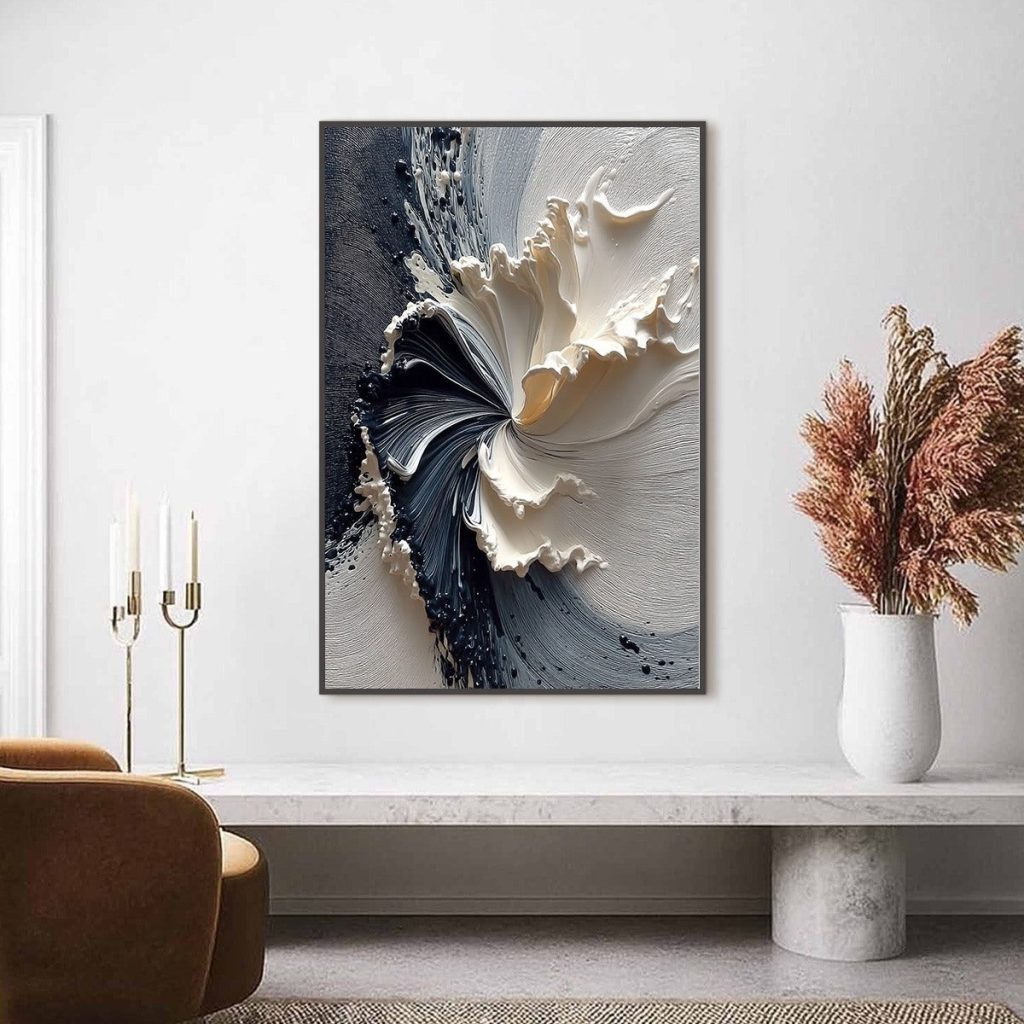
In practical terms, black and white artwork functions as a universal design connector. It complements warm-toned interiors just as gracefully as cool, minimalist spaces, acting as a visual bridge between disparate elements in a room. Place a bold monochrome canvas beside vibrant textiles, and it grounds the palette rather than competing with it. Hang black and white paintings in a neutral corridor, and they introduce drama without overwhelming the senses. This adaptability makes monochrome art a staple of modern decor, where simplicity and elegance coexist. Beyond aesthetics, these pieces carry historical gravitas—echoing traditions of printmaking, photography, and calligraphy—while remaining thoroughly contemporary in their appeal across bedrooms, living rooms, offices, and entryways alike.
Exploring Diverse Styles: From Abstract Art to Classic Pieces
The world of monochrome art extends far beyond simple black ink on white canvas. Understanding the range of styles available helps you select unique art pieces that resonate with your sensibility and enhance your specific space. While every style carries its own energy, abstract art remains one of the most sought-after categories for collectors and casual buyers alike, offering interpretive freedom that few other genres match.
Understanding Abstract Black and White Art
Abstract art in monochrome distills visual experience down to its essentials—shape, movement, tension, and balance—without representing recognizable subjects. This makes it particularly compelling in black and white, where the interplay of dark and light becomes the entire narrative. Geometric abstract pieces, with their clean angles and structured repetition, suit contemporary spaces that favor order and precision. Fluid abstract works, characterized by sweeping brushstrokes, ink washes, or splattered textures, bring organic energy and a sense of spontaneity to a room. Large-scale abstract art commands attention as a focal point above a sofa or mantel, while smaller compositions work beautifully in grouped arrangements along hallways or stairwells. The beauty of abstract art lies in its subjectivity—each viewer brings personal meaning to the piece, making it a conversation starter and a deeply individual choice that evolves with you over time.
Other Popular Styles in Monochrome
Beyond abstraction, several other styles thrive in the black and white palette. Photorealistic drawings and prints capture extraordinary detail—portraits, cityscapes, or natural scenes rendered with such precision that they rival photography while retaining the warmth of a handmade mark. Line art, increasingly popular in modern interiors, uses continuous or minimal strokes to suggest figures, faces, or botanical forms with elegant economy. Minimalist sketches strip compositions to their barest elements, creating quiet visual moments that suit bedrooms and reading nooks. Graphic illustrations and bold typographic pieces offer yet another dimension, blending artistic expression with cultural references. Exploring these diverse styles ensures you find unique art pieces that feel authentically yours rather than generic, giving your walls character that mass-produced prints simply cannot replicate.
How to Find and Select Unique Black and White Paintings
Finding unique art pieces that genuinely speak to you requires more deliberate effort than browsing a home goods store, but the reward is a collection that feels personal and irreplaceable. Start by researching individual artists whose work aligns with your aesthetic sensibility. Social media platforms, particularly Instagram and Behance, have become powerful discovery tools where emerging and established artists share their portfolios directly. Follow hashtags related to monochrome art, engage with creators whose work catches your attention, and don’t hesitate to reach out—many artists welcome direct commissions or can point you toward available originals.
Online galleries and curated marketplaces offer another reliable avenue for sourcing unique art pieces with transparent pricing and artist backgrounds. Platforms dedicated to original artwork, such as MontCarta, typically provide detailed information about technique, materials, and the artist’s creative process, helping you make informed decisions. Local art fairs, open studio events, and university exhibitions deserve equal attention—these venues let you see work in person, assess scale and texture firsthand, and often connect you with artists at earlier career stages where prices remain accessible without sacrificing quality or originality.
When evaluating potential purchases, consider three factors beyond visual appeal. First, assess originality—limited edition prints carry more character than mass-produced reproductions, while original paintings offer singular presence. Second, trust your personal response over trends; a piece that moves you today will continue to resonate years from now, whereas something chosen purely for its fashionability may feel dated quickly. Third, establish a realistic budget that accounts for framing and installation costs alongside the artwork itself. Building a meaningful collection doesn’t require spending extravagantly on a single purchase. Many collectors acquire pieces gradually, allowing their tastes to mature and their walls to tell an evolving story rather than a static one.
Practical Steps to Incorporate Art into Your Living Space
Owning beautiful black and white artwork is only half the equation—how you position and present it determines whether a piece elevates your room or gets lost against the wall. Thoughtful placement transforms art from mere decoration into an architectural element that shapes how people experience a space.
Choosing the Right Location and Scale
Begin by identifying walls that naturally draw attention—the space above a fireplace, the wall facing the main entrance to a room, or the area behind a dining table. These high-visibility spots deserve your most impactful pieces. Before committing to hardware, tape paper cutouts matching your artwork’s dimensions to the wall and live with them for a day or two, observing how they interact with foot traffic and sightlines. Scale matters enormously: a small print on a vast wall looks lost, while an oversized canvas in a cramped hallway feels oppressive. For rooms with standard eight-foot ceilings, artwork between 24 and 36 inches wide typically strikes the right proportion above furniture. Lighting deserves equal consideration—position pieces where natural light reaches them during daytime hours, and supplement with adjustable picture lights or track lighting that washes the surface evenly without creating glare.
Framing and Display Techniques
Frame selection dramatically influences how black and white art reads within a room. Thin black metal frames reinforce a contemporary, gallery-like aesthetic, while wider white mats surrounded by natural wood frames soften the contrast and suit transitional or Scandinavian-inspired interiors. Floating frames—where the canvas appears suspended within the border—add depth and visual interest to modern decor without overwhelming the artwork itself. When grouping multiple pieces, maintain consistent spacing of two to three inches between frames for a cohesive gallery wall, or try a salon-style arrangement with varied frame sizes for eclectic energy. Leaning larger canvases on shelves or mantels creates a relaxed, layered look that allows you to rotate pieces without additional nail holes.
Balancing Art with Modern Decor Elements
Black and white artwork gains its full power when the surrounding environment supports rather than competes with it. In modern decor, let monochrome pieces anchor neutral spaces by echoing their tonal range through textiles—think charcoal throw pillows, ivory linen curtains, or a gray area rug that creates visual continuity between the art and the room. When your space already features bold colors in furniture or accent walls, black and white paintings serve as visual rest points that prevent the eye from feeling overwhelmed. Avoid hanging monochrome art directly beside highly patterned wallpaper or busy shelving; instead, give each piece breathing room with clean wall space on either side. Metallic accents in brass or matte black hardware complement monochrome artwork beautifully, tying the composition together without introducing competing visual weight.
Enhancing Your Decor with Black and White Art: Final Tips
Once your black and white paintings are in place, ongoing care ensures they remain vibrant focal points in your modern decor. Dust frames and glass monthly with a microfiber cloth, and keep original artwork away from direct sunlight to prevent fading over time. Consider rotating pieces seasonally—moving a bold abstract from the living room to a bedroom refreshes both spaces without any new investment. Use monochrome art strategically to define room themes: a series of architectural prints can establish a sophisticated study, while fluid ink works set a calming tone in a bathroom or spa-like retreat. As your collection grows, allow your walls to evolve naturally, treating your home as a living gallery rather than a finished project.
Transform Your Walls with Timeless Monochrome Art
Black and white artwork offers a rare combination of dramatic visual impact and effortless adaptability that few other design elements can match. Throughout this guide, we’ve explored how monochrome pieces carry timeless psychological depth, how diverse styles from abstract art to line drawings and photorealism provide options for every aesthetic preference, and how deliberate sourcing leads to unique art pieces that reflect genuine personal taste rather than fleeting trends. The practical steps for placement, framing, and coordination with modern decor ensure that each piece you bring home reaches its full potential within your space.
Your living environment deserves art that resonates on a personal level and evolves alongside you. Black and white paintings provide exactly that foundation—sophisticated enough to anchor a carefully designed room, yet flexible enough to shift between spaces and contexts as your life changes. Start with a single piece that genuinely moves you, experiment with positioning and framing, and trust your instincts as your collection develops. Monochrome art rewards confidence and curiosity in equal measure, transforming walls into deeply personal galleries that tell your story in the most elegant visual language available.
