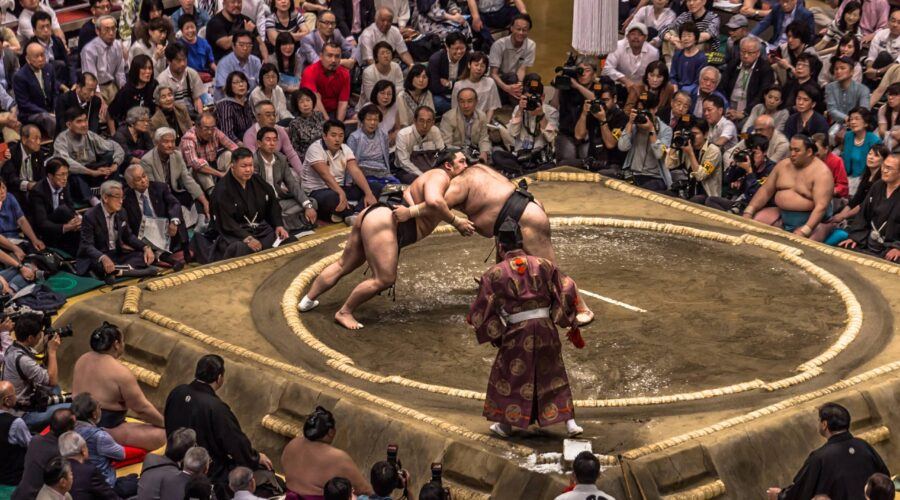
The ranking system in professional sumo is called the banzuke. At any moment you are welcome to 1xBet, where sumo bets are waiting for you too.
The banzuke is a hierarchy that determines 4 elements for each wrestler:
- status;
- salary;
- privileges;
- and opponents.
Rankings are updated after each official tournament, or basho, based mainly on win-loss records. The system is strict and highly competitive, making promotion and demotion central parts of a wrestler’s career. At the 1xBet platform you are also welcome to try your bets on the best sumo wrestlers too.
Professional sumo is divided into 6 divisions. From highest to lowest, they are Makuuchi, Juryo, Makushita, Sandanme, Jonidan, and Jonokuchi. Wrestlers in the top 2 divisions are salaried professionals, while those below them are considered trainees and receive fewer privileges. The biggest milestone for most wrestlers is reaching Juryo because it marks entry into the paid ranks.
Within the top Makuuchi division, there are several important ranks. The highest is Yokozuna, or grand champion. This title is extremely prestigious and cannot be lost through demotion. Instead, a Yokozuna is expected to retire if performances decline. Promotion usually requires 2 consecutive tournament championships and approval from the Yokozuna Deliberation Council.
Other levels inside the top tier
Below Yokozuna is Ozeki, the second-highest rank. Wrestlers are generally promoted to Ozeki after achieving around 33 wins across 3 tournaments while competing at Sekiwake level or higher. Unlike Yokozuna, Ozeki can be demoted. However, they are protected by the kadoban system. This means that an Ozeki who records a losing score in one tournament receives a warning and is only demoted after another losing tournament.
The next ranks are Sekiwake and Komusubi, collectively known with Yokozuna and Ozeki as the sanyaku ranks. Wrestlers at these levels face the toughest opponents in every tournament. Beneath them are the Maegashira wrestlers, who make up most of the top division.
A tournament lasts 15 days for the top 2 divisions, while lower-division wrestlers compete in only seven bouts. A wrestler who earns more wins than losses achieves a kachi-koshi winning record and usually rises in rank. A losing record, called make-koshi, generally leads to demotion.
The banzuke itself is handwritten in traditional calligraphy and published before every tournament. Even the difference between East and West positions matters, since East is considered slightly more prestigious. In general terms, it can be said that the ranking system reflects sumo’s combination of athletic performance, tradition, and discipline.
