Imagine a tightrope walker crossing a canyon. Halfway through, the wind picks up. A sensible performer doesn’t push forward blindly — they pause, assess, and sometimes step back entirely until conditions improve. That instinct — knowing when not to try — is exactly what the Circuit Breaker Pattern brings to modern software architecture. It is not merely a failsafe; it is a philosophy of intelligent restraint baked into the nervous system of distributed applications.
In an age where microservices talk to dozens of dependencies simultaneously, a single crumbling service can trigger a catastrophic chain of failures. The Circuit Breaker Pattern steps in like a seasoned firefighter — not to extinguish every flame, but to close the doors before the smoke spreads.
The Anatomy of a Circuit Breaker
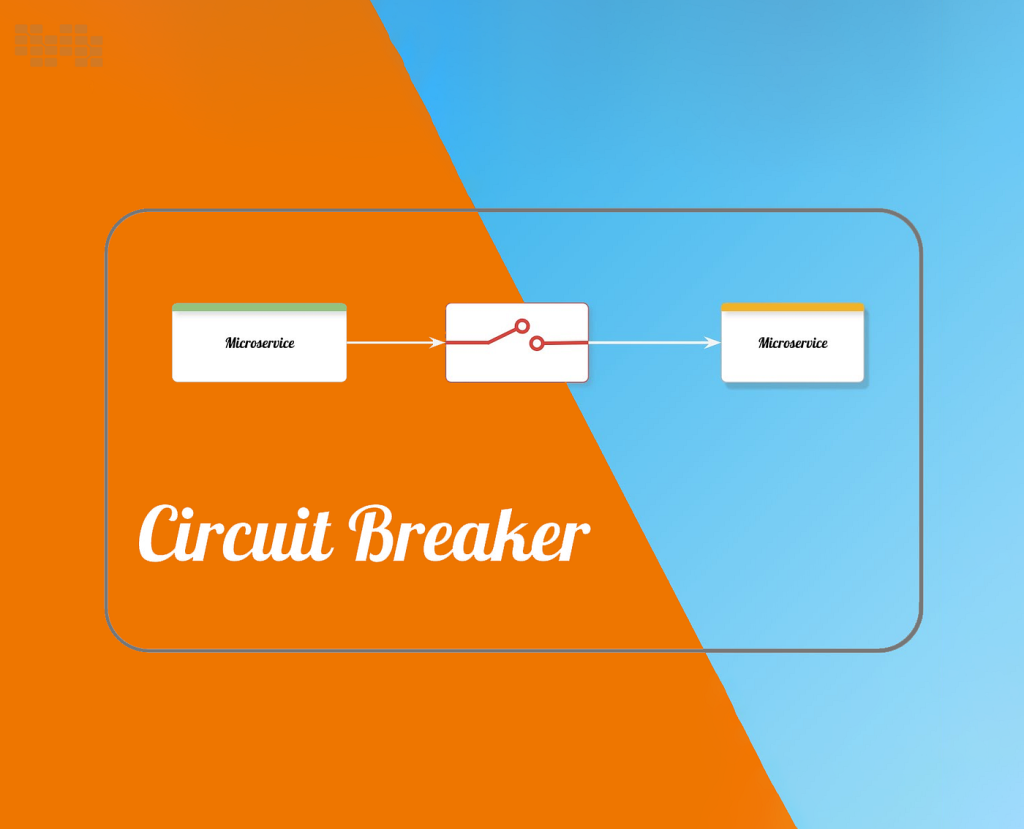
Just like an electrical circuit breaker in your home’s fuse box, the software version monitors the “current” flowing between services. When that current — in this case, requests — starts producing too many failures, the breaker trips. It snaps open, halting further calls to the struggling service.
The pattern operates in three states. In the Closed state, traffic flows freely and failure rates are tracked quietly. Once failures breach a defined threshold, the breaker flips to the Open state, instantly rejecting new requests and returning fallback responses without even knocking on the broken door. After a cooldown window, it enters a Half-Open state — cautiously sending a test request to check whether the downstream service has healed. If it has, the breaker closes again. If not, it opens once more and waits.
This elegant trilogy transforms what would be a thundering herd of failed requests into a graceful, self-healing rhythm.
Why Traditional Error Handling Falls Short
Most developers begin their journey understanding try-catch blocks and retry logic. But retrying a failed service repeatedly is like redialing a busy phone every second — it floods the already-struggling system and worsens the outage. A full stack developer classes worth its salt will teach you that resilience is not about trying harder; it’s about trying smarter.
Timeout configurations help but don’t scale. When 500 simultaneous users hit a payment gateway that’s timing out, every thread sits waiting. Memory exhausts. Thread pools fill. The cascading failure eats its way upstream until your perfectly healthy user dashboard is also dead — because it was waiting on an invoice service that was waiting on a payment API that was waiting on nothing.
Implementing the Pattern: States in Action
The implementation begins with a threshold configuration — say, five failures within ten seconds triggers the Open state. Libraries like Netflix’s Hystrix (now largely replaced by Resilience4j in the Java ecosystem) and Polly in .NET make this declaratively simple. In Node.js environments, packages like opossum offer out-of-the-box circuit breaker wrappers.
The real artistry lies in designing your fallback responses. When the breaker opens, what does the user experience? A cached result? A “service temporarily unavailable” message? A degraded but functional version of the feature? Those enrolled in a full stack course in Pune or any major tech hub will recognize this as a UI/UX challenge just as much as a backend architecture decision — the two disciplines are inseparable in real-world systems.
Circuit Breakers in the Microservices Ecosystem
In a microservices architecture, the Circuit Breaker Pattern becomes the connective tissue of reliability. Consider a recommendation engine, a user profile service, and a notification dispatcher — each a separate deployment, each capable of failing independently. Without circuit breakers, one failing service creates a domino effect that brings down an entire product.
With circuit breakers strategically placed between service boundaries, failures become isolated events rather than system-wide disasters. Monitoring tools like Prometheus and Grafana can visualize breaker state transitions in real time, giving engineering teams eyes into the health of their service mesh. This observability-first mindset is precisely why modern full stack developer course curricula now integrate DevOps and distributed systems thinking alongside React and Node.
Conclusion
The Circuit Breaker Pattern is the embodiment of engineering wisdom — knowing when to hold on and when to let go. It doesn’t make systems invincible; it makes them humble. By acknowledging failure as inevitable and designing around it gracefully, teams build products that bend without breaking.
Whether you’re exploring resilience theory or building production-grade APIs, understanding this pattern is foundational. Those pursuing a full stack course in Pune or anywhere across India’s booming tech ecosystem will find that mastering such architectural patterns separates good developers from exceptional ones. After all, the strongest bridges are not the ones that never sway — they’re the ones engineered to sway just enough.
Name – Full Stack Developer Course In Pune
Address – Office no- 09, UG Floor, East Court Phoenix Market City, Clover Park, Viman Nagar, Pune, Maharashtra 411014
Phone No – 095132 60566
Email – [email protected]
