In the world of permanent makeup and modern tattooing, PMU cartridges serve as the critical bridge between an artist’s skill and a flawless result. These precision-engineered tools determine not only the quality of every stroke but also the safety of every client who sits in your chair. Yet the risks of using non-sterile or substandard cartridges remain alarmingly real—contaminated needles can transmit bloodborne pathogens, trigger severe infections, and produce inconsistent tattoo outcomes that damage both client health and professional reputation. For professional tattoo artists, the demand is clear: cartridges must deliver unwavering reliability, guaranteed sterility, and consistent performance across every session. This article addresses those exact needs by exploring how to identify, select, and properly use PMU cartridges that meet the highest standards of hygiene and functionality. Whether you’re outfitting a new studio or refining your existing protocols, the guidance ahead will help you make informed decisions that protect your clients and elevate your craft.
Why Sterile and High-Performance PMU Cartridges Are Non-Negotiable
Every time a needle penetrates skin, it creates a direct pathway for pathogens to enter the bloodstream. Sterile tattoo needles eliminate this risk by ensuring zero microbial contamination at the point of contact. Without verified sterility, artists expose clients to hepatitis B, hepatitis C, HIV, and bacterial infections that can lead to hospitalization, scarring, or worse. Beyond physical harm, a single infection incident can destroy years of professional credibility and invite legal consequences that shutter a business permanently. Clients trust artists with their bodies, and that trust hinges on demonstrable safety protocols starting with the cartridge itself.

Performance matters equally. A high-quality PMU cartridge delivers consistent needle stability, precise ink deposit, and smooth operation throughout extended sessions. Poorly manufactured cartridges cause needle wobble, uneven saturation, and excessive skin trauma that leads to blowouts or patchy healing. These defects force artists into corrective work, waste time, and frustrate clients expecting clean results. Cartridge compatibility with your specific tattoo machine also determines whether you experience seamless operation or constant adjustments that break your creative flow.
Industry regulations reinforce these priorities. Health departments in most jurisdictions require single-use, pre-sterilized needle cartridges processed through ethylene oxide gas or gamma radiation sterilization. Compliance with standards such as ISO 13485 for medical device manufacturing isn’t optional—it’s the baseline expectation. Professional artists who invest in cartridges meeting these benchmarks protect their clients, satisfy regulatory inspections, and maintain the session-to-session reliability their workflow demands.
Exploring Types of Tattoo Needle Cartridges and Key Features
PMU cartridges come in distinct categories, each engineered for specific applications within permanent makeup and tattooing. Liner cartridges feature tightly grouped needles designed for crisp outlines, fine details, and hairstrokes in microblading-style work. Shader cartridges use looser groupings or flat configurations to fill larger areas with smooth, even color saturation. Magnum cartridges—available in curved and stacked variations—excel at blending, shading gradients, and covering broader skin surfaces with minimal passes. Understanding which cartridge type matches your technique allows you to work faster with less skin trauma.
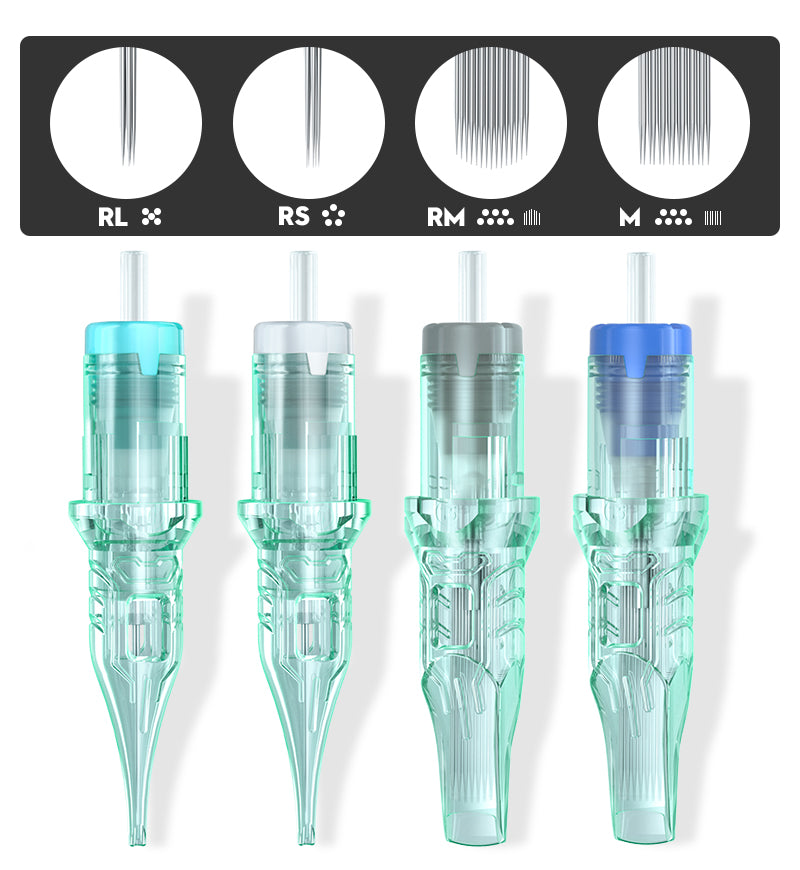
Medical-grade cartridges distinguish themselves through materials and manufacturing controls that guarantee sterility from production to application. These cartridges use surgical-grade stainless steel needles housed in medical-grade polymer casings, assembled in cleanroom environments, and individually sterilized through ethylene oxide or gamma irradiation before hermetic sealing. Brands like Biomaser have established themselves in the PMU space by adhering to these rigorous production standards, ensuring every cartridge artists open is free from contaminants—a guarantee that standard industrial-grade products simply cannot offer. When selecting sterile tattoo needles, look for clearly printed lot numbers, expiration dates, and sterilization indicators on each blister pack.
Tattoo machine accessories that complement cartridge functionality include adjustable grips for ergonomic comfort, membrane-equipped cartridges that prevent ink backflow into the machine housing, and stabilization bands that reduce vibration during long sessions. Key features to evaluate across any cartridge line include needle taper length (which affects ink flow and penetration depth), material consistency across production batches, polished needle tips that minimize skin catching, and secure locking mechanisms that prevent cartridge movement during operation.
Understanding Needle Configurations and Their Impact
Round liner configurations—ranging from single-needle (1RL) to tight groupings of seven or more—produce lines varying from ultra-fine to bold. Round shaders use similar groupings with slightly wider spacing for soft shading and color packing. Magnum configurations arrange needles in one or two rows, ideal for filling and smooth gradients. In PMU work, smaller configurations like 1RL and 3RL dominate brow work and eyeliner, while 5M1 curved magnums handle lip blush shading. Matching the right configuration to your intended technique directly impacts pigment retention, healing quality, and the precision your clients expect.
How to Choose the Right PMU Cartridges for Your Studio
Selecting the right PMU cartridges begins with verifying the manufacturer’s credentials. Look for brands that hold ISO 13485 certification, CE marking for European markets, and FDA registration where applicable. These certifications confirm that production follows medical device manufacturing standards, including cleanroom assembly, traceable sterilization processes, and rigorous quality testing at every stage. A manufacturer willing to share documentation about their sterilization methods and quality control protocols demonstrates the transparency professional artists should demand.
Consistency across production batches separates reliable cartridge brands from unreliable ones. When every cartridge from a box performs identically—same needle stability, same ink flow rate, same smooth entry into skin—you can focus entirely on your artistry rather than compensating for equipment variability. Read reviews from working artists who use cartridges daily across hundreds of sessions, not just occasional hobbyists. Pay attention to feedback about needle sharpness retention over extended procedures and whether cartridges maintain performance from the first stroke to the last.
Compatibility with your specific tattoo machine matters more than many artists realize. Not all cartridges fit all pen-style devices uniformly, and even slight misalignment creates vibration, noise, and inconsistent needle depth. Before committing to a bulk purchase, order sample packs and test them across your full range of procedures—fine linework, shading, and color packing. Evaluate how the cartridge locks into your machine, whether the membrane effectively prevents ink backflow, and how the grip diameter feels during hour-long sessions. This trial approach costs little upfront but prevents expensive mistakes when ordering in volume. Prioritize suppliers who offer responsive customer support and clear return policies, since these indicate confidence in their product’s reliability.
Step-by-Step Solutions for Ensuring Sterility and Peak Performance
Maintaining sterility and achieving consistent results requires deliberate protocols at every stage of the tattooing process. The difference between a professional studio and a risky operation often comes down to the discipline applied before, during, and after each session. These actionable steps address the core needs of professional artists who refuse to compromise on hygiene or performance quality.
Pre-Use Inspection and Preparation
Before opening any cartridge, examine the blister pack for punctures, tears, or compromised seals—any damage means potential contamination and immediate disposal. Verify the sterilization indicator has changed color appropriately and confirm the expiration date remains valid. Check the lot number against any manufacturer recall notices. Your workspace preparation matters equally: disinfect all surfaces with hospital-grade cleaners, lay fresh barrier film over your machine and work area, and ensure your hands are washed and gloved before handling sterile equipment. Only open the cartridge packaging immediately before use, never in advance, to maintain the sterile field throughout your setup process.
During Tattooing: Maintaining Performance and Safety
Once the cartridge is locked into your machine, run it briefly without skin contact to confirm smooth operation and proper needle excursion. Maintain consistent hand speed and machine voltage to prevent overworking the skin, which causes unnecessary trauma regardless of cartridge quality. When working across different skin types—thinner periorbital skin versus denser lip tissue—adjust your needle depth and stroke speed rather than forcing a single approach. Avoid touching the cartridge tip to non-sterile surfaces between passes. If you notice any change in sound, vibration, or ink flow mid-session, replace the cartridge immediately rather than pushing through with compromised equipment.
Post-Session Handling and Disposal
Used cartridges are biohazardous sharps and must be disposed of in puncture-resistant, labeled sharps containers—never in regular waste bins. Remove the cartridge from your machine using gloved hands and drop it directly into the container without recapping or bending. Clean your machine housing with manufacturer-approved disinfectant, paying attention to the cartridge receptor area where ink residue accumulates. Document each cartridge’s lot number in your client records for traceability in case of adverse reactions. Store unused cartridges in a cool, dry environment away from direct sunlight to preserve packaging integrity and sterilization validity until their next use.
Building a Safer Studio Through Informed Cartridge Selection
Sterile, high-performance PMU cartridges form the foundation of every safe and successful tattooing session. The stakes are straightforward—compromised sterility risks client health and your professional standing, while inconsistent cartridge performance undermines the precision that defines quality permanent makeup work. By understanding cartridge types, verifying manufacturer certifications, and testing products before committing to bulk orders, you position your studio to deliver reliable results session after session. The protocols outlined here—from pre-use inspection through proper disposal—address the daily realities professional artists face when balancing efficiency with uncompromising hygiene standards. These aren’t optional extras; they represent the minimum standard clients deserve and regulators expect. Treat your cartridges as essential tattoo machine accessories that demand the same careful selection you apply to your machines and pigments. Adopt these best practices consistently, document your compliance, and hold your suppliers accountable to the same standards you hold yourself. Your clients’ safety, your artistic reputation, and the longevity of your career depend on the choices you make every time you open a new cartridge.
