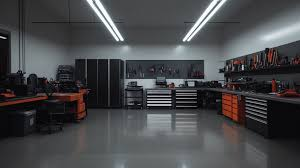
Every professional tradesperson knows the frustration of working under inadequate lighting—squinting at dim workbenches, dealing with the annoying flicker of aging fluorescent tubes, and watching energy bills climb month after month. Poor workshop lighting doesn’t just strain your eyes; it compromises precision, slows productivity, and creates genuine safety hazards when you can’t clearly see what you’re cutting, welding, or assembling. The solution lies in modern LED lights for shop applications, which have revolutionized how professionals illuminate their workspaces. This comprehensive guide is designed specifically for professional tradespeople and contractors who demand reliable, high-performance lighting. We’ll walk you through every stage of installing LED shop lights to achieve professional-grade results—from initial planning and layout design through mounting, wiring, and final optimization. Whether you’re upgrading an existing shop or outfitting a new workspace, following these proven techniques will ensure you create a lighting environment that enhances both safety and productivity while delivering long-term cost savings.
Why LED Shop Lights Are the Superior Workshop Lighting Solution
When comparing lighting technologies for professional workshops, LED shop lights consistently outperform traditional fluorescent tubes and high-intensity discharge (HID) fixtures across every meaningful metric. The most immediate advantage is energy efficiency—LED technology converts approximately 95% of energy into light rather than heat, reducing operational costs by 50-75% compared to fluorescent alternatives. This translates directly to lower monthly utility bills, a critical consideration for shops running lights eight to twelve hours daily.

Beyond cost savings, LED lights deliver superior light quality that directly impacts work precision. With color rendering index (CRI) values typically exceeding 80, LEDs reveal true colors and fine details that fluorescent lighting obscures. There’s no warm-up delay or annoying flicker that causes eye strain during extended work sessions—LEDs provide instant, stable illumination the moment you flip the switch. Their operational lifespan of 50,000 hours or more means you’ll replace fixtures far less frequently than fluorescent tubes that burn out every few years, dramatically reducing maintenance downtime and replacement costs.
Professional environments also benefit from LED durability in challenging conditions. These fixtures perform reliably in cold temperatures where fluorescent lights struggle to ignite, and their solid-state construction withstands vibration from machinery without premature failure. Finally, LEDs contain no mercury or hazardous materials, eliminating special disposal requirements and creating a safer workspace environment for your team.
Planning Your LED Shop Lighting Layout
Successful LED shop lighting begins long before you pick up a drill—proper planning ensures you achieve uniform illumination without dark spots or wasted energy. Start by measuring your workspace dimensions and noting ceiling height, as this determines both fixture quantity and mounting approach. A typical single-car garage shop (12×24 feet) with 8-foot ceilings requires approximately 8,000-10,000 lumens total, while larger commercial shops need proportionally more. Calculate your needs using the industry standard of 50-75 foot-candles for general shop work, with 100+ foot-candles for precision tasks like inspection or detailed assembly.
Color temperature selection significantly impacts visual comfort and accuracy. Professional workshops perform best with 4000K-5000K daylight white LEDs, which render colors naturally and reduce eye fatigue during extended sessions. Avoid warm 3000K temperatures that create a yellowish cast unsuitable for color-matching or detailed work. Next, select appropriate fixture types based on your ceiling structure—linear strip lights work perfectly for standard joist ceilings, while high-bay fixtures suit warehouses with 12+ foot ceilings, and flush-mount panels integrate seamlessly with drop ceilings.
Map your fixture placement to eliminate shadows on workbenches, machinery, and storage areas. Position lights directly above work surfaces rather than behind where you’ll stand, which creates problematic shadows. Finally, calculate your electrical load by totaling fixture wattages—a 20-amp circuit safely handles approximately 1,920 watts continuous load, typically supporting 10-15 LED shop fixtures. Verify your existing circuit capacity or plan for dedicated circuits if upgrading an entire shop to prevent breaker trips during operation.
Step-by-Step Installation Guides for Professional Tradespeople
Tools and Safety Precautions
Before beginning any electrical work, assemble the essential tools: a non-contact voltage tester to verify power is off, a cordless drill with appropriate bits for your ceiling material, wire strippers, wire nuts rated for your gauge, a Phillips and flathead screwdriver set, a sturdy 6-foot or 8-foot ladder, and measuring tape. Safety must be your absolute priority—always shut off power at the circuit breaker and verify it’s dead using your voltage tester before touching any wiring. Lock out the breaker panel if others share your workspace to prevent accidental power restoration. Wear safety glasses throughout the installation to protect against falling debris when drilling overhead, and use non-slip footwear on your ladder. Keep your work area clear of trip hazards and ensure adequate lighting from temporary sources during installation. Familiarize yourself with your local electrical codes before starting—many jurisdictions require permits for hardwired lighting installations, and all work must meet National Electrical Code (NEC) standards. If you encounter unfamiliar wiring configurations or feel uncomfortable with any electrical aspect, consult a licensed electrician rather than risking injury or code violations.
Mounting and Wiring Your LED Shop Lights
Begin by marking your planned fixture locations on the ceiling using your layout plan. For exposed joist ceilings, locate solid wood joists using a stud finder and mark mounting points directly into structural members—never rely solely on drywall anchors for fixtures weighing more than a few pounds. Most LED shop lights include chain or cable hanging kits; attach mounting hooks or brackets directly to joists with lag screws for secure support. For concrete ceilings in commercial spaces, drill pilot holes using a hammer drill with masonry bits, then install concrete anchors rated for your fixture weight before attaching mounting hardware. Drop ceiling installations require specialized clips that rest on the T-bar grid—ensure your ceiling grid can support the combined fixture weight or add supplemental support wires to the structural ceiling above.
For wiring connections, identify your power source—typically an existing junction box or dedicated circuit. If daisy-chaining multiple fixtures, run from your power source to the first fixture, then connect subsequent fixtures in series using the through-wiring knockouts most LED fixtures provide. This approach minimizes wire runs and simplifies installation compared to individual home runs for each fixture. Strip wire insulation approximately 3/4 inch, connect black to black (hot), white to white (neutral), and green or bare copper to the ground wire using appropriately sized wire nuts. Twist wires clockwise before applying the wire nut, then tug firmly to verify a secure connection—loose connections create resistance, heat, and potential fire hazards. Secure all wiring with cable clamps at junction points and use zip ties to bundle excess wire neatly against the ceiling structure. Once all fixtures are mounted and wired, restore power at the breaker and test each fixture individually, checking for proper illumination and listening for any unusual humming that might indicate a loose connection requiring immediate correction.

Optimizing Your Lighting Solutions for Maximum Efficiency
Installation completion marks the beginning of optimization—fine-tuning your LED shop lights ensures you extract maximum performance and efficiency from your investment. Start by observing your workspace during typical work hours, identifying any shadows cast on workbenches, machinery, or assembly areas. Adjustable fixtures can be angled to redirect light where needed, while fixed installations may benefit from adding supplemental task lighting in problematic zones. Pay particular attention to areas where you perform detailed work—precision tasks demand shadow-free illumination that follows the work rather than creating silhouettes.
Integrating smart controls amplifies your energy savings beyond LED efficiency alone. Motion sensors automatically extinguish lights in storage areas or sections of large shops when unoccupied, reducing runtime by 30-50% without sacrificing convenience. Dimming controls allow you to dial back illumination during less demanding tasks or when natural daylight supplements your artificial lighting, extending fixture lifespan while cutting energy consumption. These controls typically pay for themselves within two years through reduced electricity costs.
Maintain your LED investment through periodic cleaning—dust accumulation on lenses can reduce light output by 20% over time. Wipe fixtures quarterly with a dry microfiber cloth, or use slightly dampened cloths for stubborn grime, ensuring power is off during cleaning. If fixtures hum audibly, check for loose mounting hardware or dimmer incompatibility, as LEDs require specific dimmer types. Lights that fail to illuminate may have tripped breakers, loose wire connections, or require driver replacement—most quality LED fixtures from manufacturers like Led Hyperlite feature replaceable drivers rather than requiring complete fixture replacement, significantly reducing long-term maintenance costs.
Maximizing Your Workshop Lighting Investment
Upgrading to LED shop lights represents one of the smartest investments professional tradespeople can make in their workspace. Throughout this guide, we’ve demonstrated that LED technology delivers unmatched energy efficiency, superior light quality, extended lifespan, and reduced maintenance compared to outdated fluorescent and HID systems. Proper planning—calculating lumens, selecting appropriate color temperatures, and mapping fixture placement—forms the foundation for a successful installation. Following the step-by-step installation process with attention to safety protocols and electrical code compliance ensures your lighting system performs reliably for decades. Post-installation optimization through strategic aiming, smart controls, and routine maintenance maximizes both efficiency and productivity in your daily operations. The initial time and effort invested in a professional-grade LED installation pays substantial dividends through lower energy bills, improved work precision, enhanced safety, and minimal maintenance requirements. Your workshop lighting directly impacts the quality of your craftsmanship and your bottom line—by implementing the techniques outlined in this guide, you’ve created an optimized environment that will serve your professional needs reliably while delivering measurable return on investment for years to come.
