As a busy parent, you want nothing but the best for your baby, and that includes providing nutritious, wholesome meals from the very start. Homemade baby food offers complete control over what goes into your little one’s body, free from preservatives, added sugars, and questionable ingredients often found in commercial options. Yet between diaper changes, sleepless nights, and endless laundry, finding time to prepare fresh meals can feel overwhelming.
The good news is that making homemade baby food doesn’t have to be complicated or time-consuming. With the right approach and tools, you can prepare nutritious meals in minutes rather than hours. Modern cooking solutions have transformed what used to be a labor-intensive process into something remarkably simple and efficient.
Perhaps the biggest concern for time-strapped parents is the cleanup that follows meal preparation. Mountains of dishes and messy kitchen counters can turn a well-intentioned cooking session into a dreaded chore. This guide will show you how to navigate the world of homemade baby food while keeping both preparation and cleanup manageable, so you can spend less time in the kitchen and more time enjoying precious moments with your baby.
Benefits of Using a Baby Food Maker
A dedicated baby food maker transforms the daunting task of preparing fresh meals into a streamlined process that fits seamlessly into your daily routine. Unlike traditional cooking methods that require multiple pots, strainers, and blenders scattered across your kitchen, these specialized appliances consolidate everything into one compact unit. You simply add your ingredients, press a button, and within minutes you have perfectly steamed and pureed food ready for your baby.

The real advantage lies in how these devices eliminate guesswork from the equation. Consistent texture matters tremendously when introducing solids to your baby, and achieving that smooth, lump-free consistency manually can be frustrating. Baby food makers deliver uniform results every time, whether you’re preparing sweet potatoes, pears, or chicken. This reliability means less food waste from batches that didn’t turn out right and more confidence in what you’re serving.
Beyond the cooking itself, these appliances address the cleanup burden that often discourages parents from making homemade food. Most models feature dishwasher-safe components and non-stick surfaces that wipe clean in seconds. The contained cooking process also means less splatter on countertops and fewer dishes piling up in your sink. When you’re already managing countless baby-related tasks throughout the day, this simplified cleanup can make the difference between regularly preparing fresh food and defaulting to store-bought options.
Health Benefits
When you prepare baby food at home, you know exactly what’s going into each spoonful. Commercial baby foods often contain added water as a primary ingredient, diluting nutritional content while extending shelf life. Some brands include unnecessary thickeners, modified starches, or concentrate forms of fruits that increase sugar content without providing corresponding nutritional benefits. By making food yourself, you ensure your baby receives pure, whole ingredients with their natural nutrients intact.
Baby food makers preserve more vitamins and minerals compared to traditional boiling methods. Steaming vegetables and fruits retains water-soluble vitamins like vitamin C and B vitamins that would otherwise leach into cooking water and get discarded. The quick cooking times also minimize nutrient degradation from prolonged heat exposure. Fresh carrots prepared in a baby food maker contain significantly more beta-carotene than jarred versions that have been processed, heated multiple times, and stored for months. This nutritional advantage compounds over time as your baby consumes homemade meals daily during those critical developmental months.
Time-Saving
The beauty of a baby food maker lies in its hands-off operation. While traditional methods require you to monitor boiling water, test doneness with a fork, drain carefully, transfer to a blender, and then puree in batches, these appliances handle everything automatically. You spend perhaps two minutes washing and chopping ingredients, then the machine takes over for the next fifteen to twenty minutes while you attend to other tasks. There’s no standing over a hot stove or constantly checking if vegetables are tender enough.
Batch preparation becomes genuinely effortless with the right approach. Dedicate one hour on a weekend afternoon to preparing an entire week’s worth of meals. Steam and puree multiple varieties of fruits, vegetables, and proteins, then portion them into ice cube trays or small containers. Once frozen, pop them into labeled freezer bags. Each morning, simply transfer a few cubes to the refrigerator to thaw for that day’s meals. This system means you’re only actively cooking once weekly rather than scrambling to prepare fresh food at every mealtime.
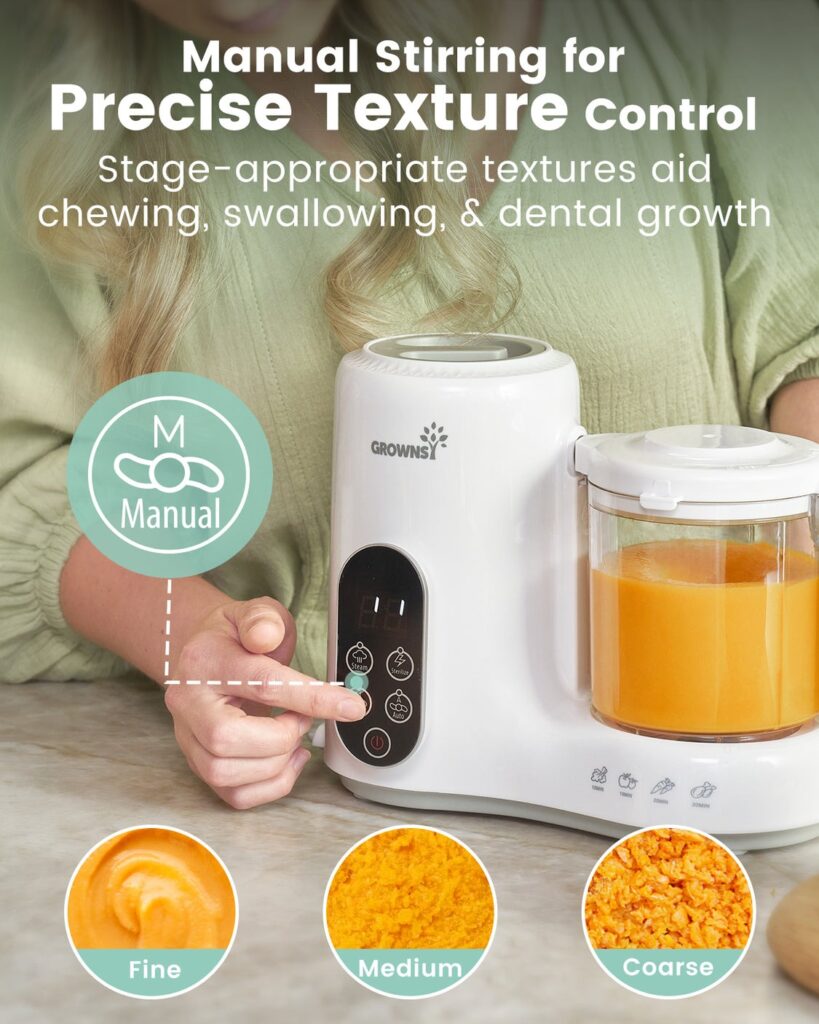
The integrated design eliminates the most time-consuming aspect of traditional baby food preparation: transferring hot food between multiple vessels. You’re not juggling a steaming pot over to the sink, then scooping soft vegetables into a blender, then cleaning both appliances afterward. Everything happens in one container, and that single container becomes your only cleanup task. For exhausted parents operating on limited sleep, these saved minutes throughout the day add up to meaningful relief.
Convenience
Modern baby food makers fit comfortably on kitchen countertops without monopolizing valuable space. Their compact footprint means you can keep the appliance readily accessible rather than stored away in a cabinet, removing the friction of retrieving and setting up equipment each time you want to prepare food. This constant availability encourages more frequent use and makes it easy to whip up fresh meals spontaneously when you notice you’re running low on prepared portions.
Storage becomes remarkably straightforward when you establish a simple system. Many parents find success using silicone ice cube trays designed specifically for baby food, with each cube holding approximately one ounce. Once frozen solid, transfer cubes to labeled freezer bags noting the contents and preparation date. Homemade baby food maintains optimal quality for three months in the freezer, giving you flexibility to prepare larger batches without worry. When mealtime arrives, thaw the needed portions in the refrigerator overnight or use gentle reheating methods, and you have fresh-tasting food ready in moments.
Choosing the Right Baby Food Maker
Selecting the right baby food maker requires understanding your specific needs and kitchen workflow. Start by considering your typical batch size and how often you plan to prepare food. If you prefer making large weekly batches, look for models with generous capacity that can handle multiple servings in one cycle. Smaller households or parents who prefer ultra-fresh daily preparation might benefit from compact models that process single servings quickly.
The cooking method matters significantly for both results and cleanup. Steam-based systems generally preserve more nutrients and require less scrubbing afterward, as food doesn’t stick to heating elements. Some models offer combination steaming and blending in a single bowl, while others use separate compartments that require transferring food between stages. The all-in-one design minimizes dishes but may limit your ability to steam multiple ingredients simultaneously. Consider whether you’ll frequently prepare mixed meals requiring different cooking times for various ingredients.
Ease of cleaning should rank high on your priority list since you’ll be washing components after every use. Check whether parts are dishwasher-safe and examine the design for hard-to-reach crevices where food might accumulate. Models with removable blades and smooth surfaces without excessive grooves or seams will save you frustration during daily cleanup. Read through user manuals before purchasing to understand the disassembly process, as some designs require more steps than others to access all components for thorough washing.
Budget
Baby food makers span a wide range of investment levels, from basic models to premium appliances with extensive features. Before shopping, calculate how much you’d typically spend on commercial baby food over six to twelve months. Most parents find that even mid-range appliances pay for themselves within a few months through savings on jarred food, making this a financially sound investment regardless of which tier you choose.
Focus on value rather than simply finding the cheapest option. A well-constructed appliance that lasts through multiple children and perhaps gets passed to friends or family members offers better long-term value than a budget model that fails after six months. Look for solid warranties that indicate manufacturer confidence in durability. Consider that spending slightly more upfront for dishwasher-safe components and reliable performance will save you time and replacement costs down the road, ultimately proving more economical than repeatedly replacing inadequate equipment.
Brand and Reviews
Established brands in the baby product space typically offer better customer support and more reliable performance than unknown manufacturers. Companies specializing in infant feeding equipment understand the safety standards and practical needs specific to preparing baby food. They’re more likely to use food-grade materials free from harmful chemicals and design products that withstand frequent use and cleaning. Brands like Grownsy have built reputations in the mother and infant industry by focusing on practical solutions that address real parenting challenges.
Real user reviews reveal insights that marketing materials never mention. Look for patterns in feedback rather than focusing on individual complaints or praise. If multiple reviewers mention that a model develops leaks after several months or that the blending function struggles with fibrous vegetables, take those warnings seriously. Pay attention to comments about customer service experiences, as responsive support becomes invaluable if you encounter issues. Reviews from parents with babies similar in age to yours provide the most relevant perspectives on whether a particular model will suit your stage of feeding.
Additional Features
Automatic shut-off functionality provides peace of mind for distracted parents juggling multiple tasks. This safety feature prevents overheating and potential damage if you forget about the appliance while managing a fussy baby or handling an unexpected situation. Some models include indicator lights or sounds that alert you when cooking completes, eliminating the need to constantly check on progress.
Adjustable texture settings allow one appliance to grow with your baby’s developmental stages. Early purees require completely smooth consistency, but as your baby advances, you’ll want chunkier textures that encourage chewing skills. Models offering multiple blending speeds or pulse functions give you control over final texture without requiring separate equipment. Built-in measuring marks on the cooking bowl help ensure proper water levels and ingredient quantities, reducing guesswork and failed batches. Consider whether the appliance can handle foods beyond purees, such as gentle reheating or defrosting frozen portions, extending its usefulness throughout your baby’s first years.
Start Your Homemade Baby Food Journey
Making homemade baby food represents one of the most meaningful investments you can make in your child’s health and development. Throughout this guide, we’ve explored how baby food makers transform what seems like an overwhelming task into a manageable routine that fits seamlessly into your busy life. These specialized appliances deliver consistent nutrition, preserve vital vitamins and minerals, and eliminate the guesswork that often discourages parents from preparing fresh meals.
The combination of time savings, simplified cleanup, and superior nutritional quality makes homemade baby food both practical and beneficial. You’re not sacrificing convenience for health—modern baby food makers provide both. By spending just one hour weekly on batch preparation, you can ensure your baby receives wholesome, preservative-free meals throughout their crucial developmental stages while actually reducing your daily kitchen workload.
Take that first step today by selecting a baby food maker that matches your needs and budget. Start with simple single-ingredient purees to build confidence, then gradually experiment with combinations as you and your baby discover new favorites. Your future self will thank you for establishing this healthy foundation, and your baby will thrive on the pure, nutritious meals only a parent’s care can provide.
