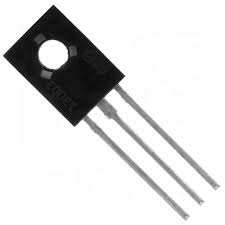
Transistors form the backbone of virtually every electronic device we use today, from smartphones and computers to industrial control systems and automotive electronics. Yet engineers and hobbyists frequently encounter a frustrating challenge: sourcing reliable transistors with accurate, complete specifications that match their project requirements. The market is flooded with options, but distinguishing quality components from substandard alternatives while navigating technical datasheets can be overwhelming. This guide provides a comprehensive roadmap for purchasing transistors confidently, covering essential transistor types like TO-92, N-Channel MOSFETs, and Power MOSFETs, along with detailed specification interpretation and selection criteria. You’ll discover how to read datasheets effectively, identify quality suppliers, and apply a systematic approach to matching components with your circuit design needs. Whether you’re prototyping a new product or scaling up production, understanding these fundamentals ensures you invest in transistors that deliver reliable performance and longevity.
Understanding Transistors and Electronic Components: A Foundation
Core Role in Circuit Design
Transistors function as the fundamental building blocks of modern electronics, operating either as amplifiers that boost electrical signals or as switches that control current flow within circuits. These semiconductor devices enable everything from processing information in microprocessors to regulating power in battery management systems. In smartphones, transistors number in the billions, managing data processing and power distribution simultaneously. Industrial controllers rely on them for precise motor control and sensor signal conditioning. Automotive systems depend on transistors for engine management, safety features, and infotainment systems. Understanding how transistors manipulate electrical signals through their three terminals—base, collector, and emitter in BJTs, or gate, drain, and source in MOSFETs—directly influences your ability to select components that meet voltage thresholds, current handling capacity, and switching speed requirements. This foundational knowledge transforms purchasing from guesswork into strategic decision-making, ensuring your selected transistors deliver the signal control and power management your circuit demands while maintaining performance stability across operating conditions and environmental variables.

Key Transistor Types for Sale: TO-92, N-Channel MOSFET, and Power MOSFET
TO-92 Transistors: Features and Applications
TO-92 package transistors represent the most recognizable format for low-power applications, featuring a compact three-legged plastic case ideal for breadboard prototyping and through-hole PCB assembly. These transistors typically handle voltages up to 40-50V and currents ranging from 100mA to 600mA, making them perfect for signal amplification, logic-level switching, and sensor interface circuits. Their small thermal mass limits power dissipation to approximately 500mW at room temperature, which suits audio preamplifiers, LED drivers, and microcontroller interfacing. The standardized pinout and widespread availability make TO-92 transistors like the 2N2222 (NPN) and 2N2907 (PNP) go-to choices for educational projects and low-frequency analog circuits where cost-effectiveness and ease of replacement matter more than cutting-edge performance specifications.
N-Channel MOSFETs: Advantages in Modern Electronics
N-Channel MOSFETs dominate contemporary circuit design due to their superior efficiency and minimal on-resistance, often measuring below 10 milliohms in modern devices. These transistors require virtually no gate current to maintain conduction, reducing control circuit complexity and power consumption in digital switching applications, DC-DC converters, and battery-powered devices. Their fast switching speeds—transitioning in nanoseconds—enable high-frequency operation in switch-mode power supplies and motor controllers. The voltage-controlled operation eliminates the base current requirements of bipolar transistors, simplifying drive circuits while delivering higher current handling in compact packages. Engineers favor N-Channel MOSFETs for applications requiring efficient power conversion, such as laptop chargers, solar inverters, and electric vehicle battery management systems where thermal efficiency directly impacts system reliability and operational lifespan.
Power MOSFETs: Handling High Currents and Voltages
Power MOSFETs excel in demanding applications requiring robust current handling from tens to hundreds of amperes while withstanding voltages exceeding 600V in specialized variants. The critical parameter Rds(on)—drain-to-source resistance when fully conducting—determines conduction losses and heat generation, with lower values indicating better efficiency in motor drives, industrial inverters, and automotive ignition systems. Thermal management becomes paramount as power dissipation scales with current squared, necessitating heatsinks, thermal pads, and careful PCB layout to maintain junction temperatures within safe operating ranges. These transistors feature reinforced die structures and specialized packages like TO-220, TO-247, and D2PAK that facilitate heat extraction while providing mechanical stability for high-vibration environments, making them indispensable for three-phase motor controllers, welding equipment, and renewable energy conversion systems where reliability under sustained high-power operation determines system uptime.
How to Read and Understand Transistor Specifications
Essential Parameters for Engineers
Voltage ratings define the maximum potential difference a transistor can withstand without breakdown—Vce (collector-emitter voltage) for BJTs and Vds (drain-source voltage) for MOSFETs. Exceeding these limits causes permanent damage through avalanche breakdown or punch-through effects. Current ratings specify maximum continuous and pulsed currents—Ic for BJT collectors and Id for MOSFET drains—determining how much load a transistor can drive before thermal runaway occurs. Operating these parameters at 70-80% of maximum ratings provides safety margins for temperature variations and voltage spikes. Gain specifications like hFE in BJTs indicate amplification capability, showing how much collector current results from base current input. Power dissipation limits, calculated from voltage drop multiplied by current, dictate thermal management requirements. Understanding these boundaries prevents component failure and ensures circuits operate reliably across temperature extremes, supply voltage fluctuations, and load variations that occur in real-world applications.
Deciphering Datasheets for Informed Decisions
Datasheets organize critical information into sections: absolute maximum ratings appear first, defining survival limits never to be exceeded during operation. Electrical characteristics follow, presenting typical and guaranteed performance values at specified test conditions—always verify these conditions match your application environment. Graphs display how parameters vary with temperature, voltage, and frequency, revealing behavior across operating ranges that tables cannot capture. Locate threshold voltages, switching times, and capacitance values that affect circuit timing and stability. Compare equivalent parts from different manufacturers by examining these specifications side-by-side, noting that identical part numbers from various sources may have subtle differences. Common pitfalls include confusing absolute maximums with recommended operating conditions, overlooking temperature derating factors, and ignoring package-specific thermal resistance values that dramatically affect real-world power handling. Cross-reference application notes and reference designs to validate your interpretation before finalizing component selection.
Factors to Consider When Buying High-Quality Transistors
Ensuring Reliability and Performance
Sourcing transistors from established manufacturers with documented quality control processes minimizes the risk of counterfeit components that plague the electronics supply chain. Reputable brands provide traceability through lot codes and batch numbers, enabling verification of authenticity through manufacturer databases. Testing incoming components with basic parameter checks—measuring threshold voltages, verifying pinouts with multimeters, and conducting simple switching tests—catches defective parts before they enter your assembly process. Counterfeit transistors often exhibit inconsistent electrical characteristics, poor thermal performance, and premature failure under stress conditions. Long-term durability depends on proper derating, where components operate well below maximum ratings to accommodate aging effects, temperature cycling, and unexpected transients. Components certified to industry standards like AEC-Q101 for automotive or MIL-PRF-19500 for military applications demonstrate proven reliability through rigorous qualification testing that consumer-grade parts never undergo.
Matching Transistors to Project Needs
Calculate power dissipation by multiplying voltage drop across the transistor by current flow, then select packages with adequate thermal resistance to maintain junction temperatures below 125°C under worst-case conditions. Through-hole packages like TO-220 facilitate heatsink attachment for moderate power applications, while surface-mount formats such as DPAK and D2PAK optimize board space in production designs. Environmental factors including ambient temperature ranges, humidity exposure, and vibration levels determine whether commercial, industrial, or automotive-grade components suit your application. High-altitude or radiation-exposed environments require specialized screening beyond standard commercial specifications. Consider lead-free compliance for RoHS markets, moisture sensitivity levels for storage requirements, and mechanical stress tolerances for products subjected to shock or flexing during operation or handling.
Where to Find Transistors for Sale: Trusted Sources and Best Practices
Evaluating Online and Offline Suppliers
Authorized distributors like Digi-Key, Mouser, and Newark provide guaranteed authentic components with full manufacturer warranties and technical support, though typically at premium pricing compared to alternative channels. These platforms offer extensive parametric search tools, real-time inventory tracking, and same-day shipping options that accelerate prototyping cycles. Direct manufacturer purchases suit high-volume production runs, offering cost advantages and customization options but requiring longer lead times and minimum order quantities. Local electronics retailers serve immediate needs for common components, though limited inventory restricts selection to popular part numbers. Marketplace platforms present lower prices but demand rigorous seller verification—check feedback ratings, business history, and return policies before committing. For automation accessories and industrial applications, specialized suppliers like Utsource provide focused inventories with technical expertise in control systems and power management components. Counterfeit risk increases with unauthorized resellers offering suspiciously low prices on premium components. Bulk purchasing reduces per-unit costs significantly, but requires careful storage in moisture-controlled environments with anti-static protection to maintain component integrity. Establish relationships with multiple suppliers to ensure continuity when supply chain disruptions or component obsolescence threaten project timelines, and always verify return policies that accommodate defective parts or specification mismatches discovered during testing.
Step-by-Step Guide to Selecting and Purchasing the Right Transistor
Step 1: Define Your Circuit Design Requirements
Begin by documenting precise electrical parameters your circuit demands: maximum operating voltage, peak and continuous current levels, switching frequency for digital applications, and ambient temperature range. Calculate worst-case power dissipation scenarios including startup transients and fault conditions that stress components beyond normal operation. Consider future design iterations that might require higher performance margins, adding 20-30% headroom to initial specifications to accommodate circuit modifications without component redesign. Create a requirements checklist that includes package preferences, mounting constraints, and any regulatory compliance needs like automotive qualification or medical device standards that restrict component choices from the outset.
Step 2: Research and Compare Transistor Specifications
Utilize parametric search engines on distributor websites to filter thousands of options down to candidates meeting your voltage, current, and package requirements simultaneously. Download datasheets for shortlisted parts and create comparison tables highlighting Vds/Vce ratings, Rds(on) values, switching times, and thermal resistance figures. Cross-reference specifications across manufacturer websites and independent test data to verify claimed performance, as marketing materials sometimes present best-case rather than typical values. Prioritize parameters most critical to your application—low on-resistance for power efficiency, fast switching for high-frequency operation, or high gain for sensitive amplification—ensuring selected transistors excel where your design demands peak performance rather than compromising across all specifications.
Step 3: Evaluate Suppliers and Pricing
Check real-time inventory levels across multiple authorized distributors to identify stock availability and lead times, avoiding single-source dependencies that risk project delays during component shortages. Compare unit pricing at various quantity breaks, calculating total cost including shipping, handling fees, and minimum order requirements that might necessitate purchasing excess inventory. Assess supplier technical support quality by reviewing available resources like application notes, reference designs, and responsive engineering assistance that proves invaluable during circuit troubleshooting. Verify return policies accommodating specification mismatches or defective components discovered during testing, and confirm whether suppliers offer sample programs for prototyping before committing to production quantities.
Step 4: Purchase and Validate with Testing
Order sample quantities for initial validation, testing critical parameters with bench equipment before production procurement. Measure threshold voltages with precision power supplies, verify switching characteristics using oscilloscopes with adequate bandwidth, and conduct thermal testing under representative load conditions with infrared cameras or thermocouples. Compare measured values against datasheet specifications, investigating any discrepancies that exceed typical tolerance ranges. Perform stress testing beyond normal operating conditions to identify failure modes and safety margins, cycling transistors through temperature extremes and voltage transients that simulate years of field operation. Document test results systematically, creating acceptance criteria that incoming inspection can replicate during production to ensure every batch maintains the performance your design requires for consistent reliability.
Making Informed Transistor Purchasing Decisions
Successfully purchasing transistors for sale with complete specifications requires understanding fundamental device types—TO-92 packages for low-power applications, N-Channel MOSFETs for efficient switching, and Power MOSFETs for demanding high-current circuits—while mastering datasheet interpretation to extract critical voltage, current, and thermal parameters. The systematic approach outlined here empowers engineers to define precise circuit requirements, compare specifications across manufacturers, evaluate supplier reliability, and validate components through rigorous testing before production commitment. Quality components sourced from authorized distributors with proper derating and thermal management ensure circuits perform reliably across their intended lifespan, avoiding costly failures from counterfeit parts or inadequate specifications. As you apply this guide to your next project, remember that investing time in thorough specification analysis and supplier verification pays dividends through reduced troubleshooting, improved system stability, and enhanced professional credibility. Keep this framework accessible as your reference for every transistor purchase, refining your selection process with each project to build expertise that distinguishes competent engineers from exceptional ones who consistently deliver robust, reliable electronic designs.
